International Casinos for UK Players: UKGC Risks
 Available in GB
A practical guide to operator licensing, access for UK residents, wagering requirements, payments, reviews, apps and crypto.

- What “international casino” means in the UK
- Best casino sites in the UK
- The access question—and the risks behind it
- Can you play there as a UK resident?
- Bonus terms: the number that matters is the wagering requirement
- Live roulette does not change the licensing picture
- Real-money play: getting funds in and winnings out
- How to read casino reviews without mistaking claims for evidence
- Casino apps: check the basics before you sign in
- Casino games: what this guide can—and cannot—verify
- Crypto deposits and withdrawals: speed versus volatility
What “international casino” means in the UK
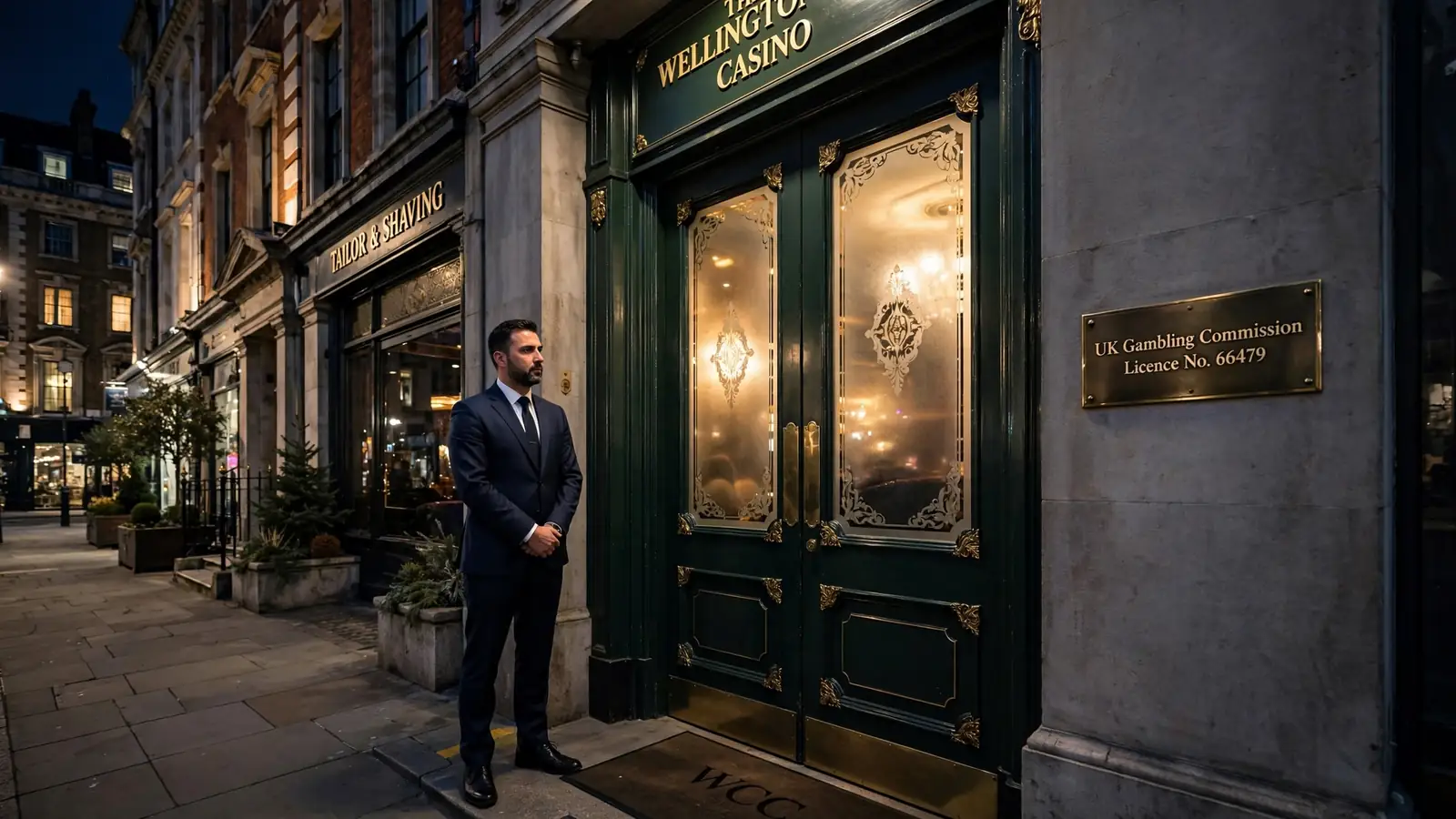
“International casino” sounds like a category with a clear standard behind it. It isn’t. In the UK context, the useful question is not how international a site looks, or where its games and marketing are aimed. It is whether the online gambling operator accepts British customers without holding a licence from the UK Gambling Commission (UKGC).
That definition is about the operator’s status, not the website’s style. A site may use familiar language, display prices in pounds or present itself as available to people in Britain. Those details do not make it a UK-licensed casino. Nor does the word “international” itself tell you what rules apply. It is a broad label; the licence is the dividing line.
The distinction matters because an offshore licence and a UKGC licence are not interchangeable. A foreign casino may be licensed in another jurisdiction, but it is not regulated by the UK Gambling Commission. Its home regulator is not the UK regulator, and its offshore licence does not give it permission to offer gambling services to customers in Great Britain.
I’d be wary of treating “licensed” as a complete answer. It can sound reassuring on a homepage, but the important detail for a British customer is who issued the licence and whether the operator holds the licence required for this market. A foreign licence says something about the operator’s status where that licence applies. It does not turn the casino into a UKGC-regulated site.
The UKGC distinction
For online gambling services offered in England, Scotland and Wales, a Gambling Commission licence is required. Without one, it is illegal for an online gambling site to offer those services there. That is why the label “international” should not blur the central point: a casino serving British customers without UKGC authorisation sits outside the UK regulatory system.
This is a distinction between two regulatory arrangements, not simply between a British website and a foreign-looking one. An operator might be based outside the UK and still hold the appropriate UKGC licence to serve the market. Conversely, a site can be easy for a British visitor to recognise and use while remaining offshore and outside UKGC regulation. The operator’s licensing position is what matters.
Pay by Phone Casino Deposits in the UK: How They Work
I find it helps to separate three ideas that promotional wording often mashes together: where a company is based, whether it has a licence somewhere, and whether it has the licence required to serve the British market. They are not the same thing. “International” may describe the company’s reach or presentation; it does not establish UK authorisation.
That also means the term “best international casino” can be misleading if “best” is taken to mean safest or officially approved for UK customers. The phrase does not identify a regulator, confirm a licence or tell you that UK rules apply. It is a description, not a guarantee. A polished site is still an offshore casino if it accepts British customers without a UKGC licence.
What the label does—and doesn’t—tell you
When people say “foreign casino”, “offshore casino” or “non-GamStop casino”, they are often pointing to the same basic feature: the operator is outside the UKGC system. The wording varies, but it should not distract from the regulatory question.
Non-GamStop European Casinos: What the Label Means
It does not mean that every such site is identical. The label alone does not tell you which overseas regulator, if any, has licensed the operator, or what conditions apply under that regulator. It does not establish that the operator follows UKGC requirements. Most importantly, it does not mean that the UKGC supervises the casino. It does not.
That is the starting point for reading anything else about these sites. If a page calls an operator “licensed”, look for the regulator being named rather than assuming the word refers to the UK Gambling Commission. If it calls a casino “international”, treat that as a broad description, not evidence that it can lawfully serve customers in Great Britain.
I’m not using the term as a recommendation. It simply identifies a category of operator with a different regulatory position from a UKGC-licensed casino. That difference is easy to miss when the branding looks familiar. The plain version is less exciting, but more useful: an international casino serving British customers without a UKGC licence is offshore and not regulated by the UK Gambling Commission.
An international casino serving British customers without a UKGC licence is offshore and not regulated by the UK Gambling Commission.
Best casino sites in the UK
- x3betBonus: Welcome Pack 100% Up to £1.000 + 200 Free Spins · Payout speed: 1-3 business days
- BeOnBetBonus: 100% up to €500 + 100 FS · Payout speed: 1-3 business days
- NightWinBonus: £900 + 400 free spins · Payout speed: 1-3 business days
- DieselwinBonus: Welcome Pack 250% up to £4000 + 200 FS · Payout speed: 1-3 business days
- SpinFormulaBonus: 550% Up To £15,000 + 550 FS · Payout speed: 1-3 business days
- AmunbetBonus: Join now and get 450% up to 2,700 GBP + 450 FS · Payout speed: 1-3 business days
The access question—and the risks behind it
A site loading in your browser can feel like a quiet green light. It isn’t. Being able to open an international casino site from Britain tells you only that the page is reachable; it does not show that the operator is authorised to serve British customers.
There is a legal distinction behind that point. An operator without a UK Gambling Commission licence cannot lawfully advertise gambling services in the UK or provide gambling facilities to customers here. A licence issued elsewhere does not replace the UKGC licence required for the British market. So a site may have a functioning homepage, account form and games, yet still lack permission to offer them to people in Britain.
That mismatch is easy to miss because the website itself can look entirely ordinary. You see familiar menus and promotional language, and nothing on the screen necessarily explains what the operator’s licence allows. A foreign licence may matter in the country that issued it, but it does not establish UK authorisation. The address bar is not a regulator.
Why a site may still open
Some non-UK-licensed casinos are supposed to block visitors from Britain. Gambling.com has reported that some do not enforce that block, and that visitors may also get around it using a basic VPN. That is a report about access practices, not a guarantee that a particular international casino site is reachable today. Blocking arrangements and website behaviour can change.
The important point is that access controls and permission to operate are different things. A site might fail to identify a visitor’s location, choose not to stop them, or be reached through a VPN. None of those circumstances gives the operator a UKGC licence. Nor does a successful registration prove that the operator is entitled to offer gambling facilities in Britain.
I would not treat a page that accepts a British address as evidence of approval. It shows what the site’s systems allowed at that moment. That is all.
When a win becomes a dispute
The risk is not merely that a site might be inaccessible later. Gambling.com has reported cases in which unlicensed operators refused to pay customers’ winnings, leaving those customers without legal recourse. That does not mean every offshore operator will withhold a payout; it does mean that, if a dispute arises, the protections and routes available through the UK regulatory system are not there to rely on.
A balance displayed in an account is not the same thing as money safely in your hands. Before depositing, it is worth asking what you could do if the operator disputed a win, closed your account or simply stopped responding. With an operator outside UKGC oversight, you cannot assume that the Commission can step in as it might in a matter involving a licensee. A polished site does not change that.
This is where “international” can become an especially slippery word. It may sound like a sign of scale or legitimacy, but it describes reach, not UK permission. A casino can operate across borders and still be outside the British licensing system. The label answers less than it appears to.
Financial Risk
Unlicensed operators may refuse to pay winnings, leaving customers without legal recourse through the UK regulatory system.
A business connection worth understanding
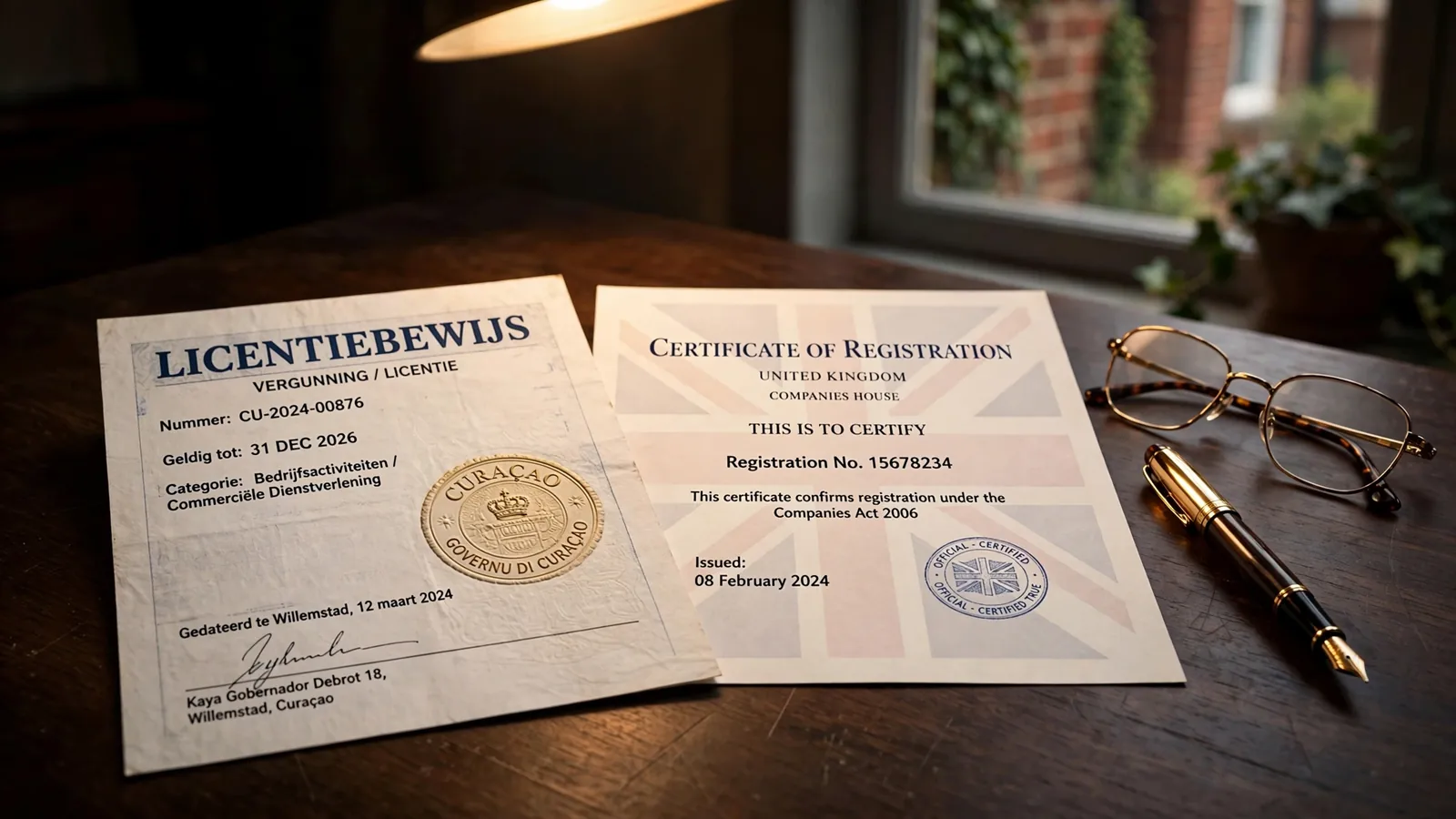
The Santeda–SIS arrangement illustrates why it is sensible to look beyond surface-level claims about an operator and its partners. Santeda held a Curaçao licence, but that licence did not permit it to operate in the UK or the US. Under a contract with Santeda, SIS received a percentage of revenue from losing bets placed through Santeda’s brands.
That detail does not, by itself, establish that a particular customer was treated unfairly or that any individual wager was affected. It does show that commercial relationships in the gambling industry can involve more than supplying a service: a partner may have a financial interest linked to customer losses. That is relevant context when judging how independent or reassuring a business association really is.
I find it useful to separate three questions that marketing tends to blur: where a company is licensed, whether that licence covers British customers, and how its commercial partners are paid. An answer to one does not settle the others. A named partner or overseas licence may sound like reassurance, but neither is a substitute for UKGC authorisation.
The practical test is not whether an international casino site opens, accepts details or displays a licence badge. It is whether the operator holds the UK licence required to serve the British market. Reachability is a technical fact. Authorisation is a legal one.
That gap matters.
Can you play there as a UK resident?
There are two different legal questions here: whether you, as a player, can be punished for placing a bet, and whether the casino is allowed to offer you that bet. They are not the same thing.
A British player is not committing an offence simply by betting with a casino licensed outside the UK. There is no UK law that makes an individual’s decision to place a bet with an overseas operator a criminal offence, and the player does not face a criminal penalty for doing so. That is the narrow answer to “can I play there?” It is not the same as saying that the casino is authorised to serve people in Britain.
The operator has its own obligation. A remote gambling business that provides facilities to customers in England, Scotland or Wales must hold a licence from the UK Gambling Commission. An overseas licence does not replace that requirement. So an international casino accepting UK players may be reachable, and a person may be able to create an account, but that does not make the operator’s service lawful in Great Britain. The distinction matters. Reachable is not authorised.
I used to treat “licensed” as if it were one universal stamp. It isn’t. A licence from another jurisdiction does not put a casino under UKGC oversight, and it does not give it permission to offer gambling facilities to British customers. The operator’s legal position and the player’s personal liability are separate questions.
That separation also helps explain what GamStop does. The scheme covers UKGC-licensed operators, so registering with GamStop blocks access to every UK-licensed gambling site in its scope. An overseas casino operating outside the UKGC system is not part of GamStop. That is why people describe these sites as non-GamStop casinos. The label is about the exclusion scheme’s reach, not a mark of approval.
GamStop only covers UKGC-licensed operators, meaning it cannot block access to overseas casinos operating outside the UKGC system.
For someone who has self-excluded, that gap is not a handy workaround. It removes a barrier they deliberately put in place. A specialist casino review reports that a self-excluded player may be able to register with a foreign site and deposit without the safeguards they would encounter at a UKGC-licensed operator. That report should not be mistaken for a promise about every site or its current process. The important point is that GamStop does not extend its block to casinos outside the UKGC’s remit.
There is another protection to keep in view: UKGC-licensed operators are subject to requirements that offshore operators are not. That includes UKGC-mandated affordability checks. If you go to a foreign casino after self-excluding, you are not simply choosing a different website; you may be stepping outside safeguards that apply in the British regulated system. The absence of those checks is not proof that a site is safer, easier to use or better for you. It means the UK regulator is not requiring that protection there.
I would keep the decision in plain terms. A British player is not criminally penalised for placing a bet with an overseas casino. But an operator without the required UKGC licence cannot lawfully provide gambling facilities to customers in Great Britain. Those statements can both be true at once. Don’t let the first one blur the second.
And if you have joined GamStop, the fact that a non-GamStop site sits outside the scheme is especially important. Self-exclusion is meant to create distance between you and gambling; moving to a site the scheme cannot block can undo that distance. If the point of registering was to stop or reduce your gambling, pause before treating an overseas casino as an exception. There is no UKGC-mandated affordability check there to act as another safeguard. That is a real difference, not fine print.
So, can you play as a UK resident? The player is not committing a crime merely by placing the bet. But the casino’s permission to serve you is a separate matter, and an overseas licence does not grant permission under the UK system. I’d keep those two facts side by side before deciding what to do.
Bonus terms: the number that matters is the wagering requirement
A welcome offer can look generous when the headline gives you a large bonus, free spins or both. I used to focus on that number and skim the terms underneath. That was the wrong way round. With a bonus, the wagering requirement tells you how much qualifying betting stands between the offer and any bonus funds becoming withdrawable.
Specialist reviews of foreign casinos report that welcome packages can be larger because offshore operators are not bound by UK Gambling Commission restrictions on bonus terms, wagering requirements and promotional language. Treat the headline as an invitation to read the conditions, not as a measure of what you will take home. These casinos are not regulated by the UKGC, and they do not provide UKGC-mandated affordability checks.
Work out the playthrough
A wagering requirement is a multiplier applied to the bonus amount. Take a £20 bonus with a 35x requirement: you would need to place £700 in qualifying bets before you could cash out. The balance may appear in your account before then, but that does not make it withdrawable.
Calculating Playthrough
Identify the bonus
Take a £20 bonus with a 35x wagering requirement.
Apply the multiplier
Multiply the bonus amount by the requirement: £20 × 35 = £700.
Determine the target
You must place £700 in qualifying bets before the funds become withdrawable.
A 100% deposit match of £100 with the same 35x requirement gives a different, much larger figure: £3,500 in bets before the bonus funds convert into cash you can withdraw. The key is to check which amount the multiplier applies to. Terms may calculate wagering against the bonus alone or against the deposit and bonus together, so the same advertised multiplier can lead to different conditions.
That distinction matters. A “100% match” describes how the bonus relates to your deposit; it does not tell you the total amount you will have to wager. Nor does a low-looking multiplier automatically make an offer easy to clear. Read the wording around the calculation before accepting anything.
Offers come in different shapes
Specialist reviews identify deposit matches, free-spins packages, no-deposit bonuses and cashback offers among the common formats at foreign casinos serving UK players. Each needs its own terms checked.
A deposit match adds bonus funds when you deposit, subject to the offer’s rules. Free spins give you spins on specified games, but the terms determine how any resulting winnings are treated. A no-deposit bonus may sound like money with no strings attached; check the wagering condition and any rules governing withdrawal. Cashback offers return some amount under stated conditions, but the label alone does not explain what counts or how the offer is calculated.
The same caution applies to a no-deposit welcome offer or free spins without a deposit. “Free” describes the entry point, not necessarily the route to a withdrawal. Before you register or accept, look for the qualifying games, excluded bets, maximum cashout conditions and expiry rules. If the terms are unclear, that uncertainty is part of the offer’s real cost.
Gibraltar Casino Licence in the UK: What It Means
I now read the conditions first. Boring, but useful.
Compare the terms, not the banner
When comparing international casino bonuses, put the wagering requirement beside the bonus amount and check the calculation base. Then read any restrictions on which games count. A headline bonus with a high qualifying-bet total may demand more play than you intended, while a smaller offer may have conditions you can understand more readily. Neither label tells you whether the offer suits you.
Do not assume that a foreign casino follows the same promotional rules as a UKGC-licensed site. Offshore operators sit outside UKGC oversight, and a big welcome package does not signal equivalent protections. Set a spending limit before you deposit, and do not chase a bonus by staking more than you planned. If an offer depends on you continuing to play to unlock funds, walking away is a valid choice.
Live roulette does not change the licensing picture
Live roulette can look more immediate than a standard digital game: a camera feed, a dealer and a table interface make the experience feel closer to a casino floor. But the live format does not change who regulates the operator. If the casino is licensed offshore, it remains outside the UK Gambling Commission’s regulatory system, whether you are playing roulette or another casino game.
That distinction is easy to lose when a site puts the live tables front and centre. “Live” describes how the game is presented; it is not a stamp of approval. A polished broadcast or professional-looking table tells you nothing by itself about UKGC oversight. The operator’s regulatory status is the point that matters.
Attention: A professional live dealer interface and smooth stream do not signify UKGC oversight or the presence of mandated affordability checks.
I’ve learned not to let presentation do the checking for me. A confident dealer, a clean interface and a smooth stream can make a site feel established. They do not make it a UK-regulated casino. The same goes for a mobile screen: changing device or format does not change the operator’s status.
There is another practical difference worth keeping in mind. Offshore operators do not provide the UKGC-mandated affordability checks that apply within the UK regulatory system. So a live table should not be mistaken for a setting with the same safeguards simply because it resembles a familiar casino experience. The game can look recognisable while the protections around it are different.
If you are comparing live roulette sites, keep the question plain: is the operator regulated by the UK Gambling Commission? An offshore licence is not a UKGC licence, and a live dealer does not bridge that gap. Nor does the word “international” tell you that the site is authorised to serve customers under UK rules.
That may sound less exciting than a tour of tables, but it is the useful distinction. Roulette’s live presentation can change the feel of play; it cannot change the operator’s regulatory position. Don’t confuse the two.
Real-money play: getting funds in and winnings out
When I look at a real-money casino, I separate the time it takes to request a withdrawal from the time the money actually reaches me. A quick payment method does not make the operator’s own approval process quick, and the published timeline is not a promise.
A specialist review reports that Skrill and Neteller withdrawals at many foreign casinos are cleared within 24 hours, with some processed in under 12. Bank transfers are a slower comparison: the same type of review describes them as often taking five to seven business days, before any extra delay added by the casino. That distinction matters. The operator may need to approve the request before a bank begins moving the funds.
The word “instant” can hide that first stage. Check whether the stated time refers to the casino processing a request or the complete journey to your account. Also look for withdrawal caps, minimums, pending periods and identity checks in the payment terms. These conditions differ from one operator to another, so a timeline from one site tells you little about the next.
There is a further complication for UK players: an offshore casino is not regulated by the UK Gambling Commission. It does not provide UKGC-mandated affordability checks, and you should not treat a payment page or a fast payout claim as evidence of UKGC oversight. If a withdrawal is delayed, the operator’s own rules and support process are what you are left dealing with.
A review of foreign-casino payment times also reports that crypto withdrawals can clear in under an hour. That is a timing claim, not a guarantee for a particular operator or account; approval and verification can still affect the wait. The value of crypto can move too, so speed is only one part of what you receive.
I used to focus on how quickly I could deposit and leave the withdrawal terms for later. That was backwards. Read the cash-out conditions before putting money in, and treat every stated processing time as operator-dependent. Fast on paper. Not settled yet.
Do
- Read cash-out conditions before depositing
- Check for withdrawal caps and identity checks
- Treat processing times as operator-dependent
Don’t
- Assume “instant” means immediate arrival
- Rely on payment speed as evidence of oversight
- Focus only on deposit speed
How to read casino reviews without mistaking claims for evidence
When I read an international casino review, I try to separate what the reviewer can point to from what the site is saying about itself. “Secure” sounds reassuring; it does not tell you who oversees the operator or what happens if there is a dispute.
Some non-GamStop platforms report using encryption to protect personal and financial information. That is a useful security measure, but it is not the same thing as regulatory oversight. Encryption may help protect data as it moves between you and a site. It does not make the operator accountable to the UK Gambling Commission.
Licensing claims need the same careful reading. A specialist casino review may describe offshore platforms as licensed by reputable authorities. That statement alone does not establish that a particular operator holds a valid licence, or that it is authorised to serve British customers. Check whether the review names the regulator and the operator, then distinguish an offshore licence from a UKGC licence. Offshore casinos are not regulated by the UK Gambling Commission.
I also watch for reviews that slide from “licensed somewhere” to “safe for UK players” without explaining the difference. Those are separate claims. An offshore licence does not bring UKGC oversight, and offshore operators do not provide the UKGC-mandated affordability checks. That matters, not just the wording of a badge.
For a real-money casino review, look for specifics: what evidence supports its security description, which authority is said to license the operator, and whether the reviewer separates verified details from promotional language. If a review praises an international roulette casino, that tells you nothing by itself about its regulatory status. The game format does not change who oversees the operator.
I have been caught by polished labels before. “Trusted” can mean little more than that a page repeats the casino’s own claims. Read the explanation, not the adjective. If the review does not make clear that the operator sits outside UKGC regulation, treat its reassurance with caution.
Casino apps: check the basics before you sign in
An app icon can make an offshore casino feel like an ordinary bit of phone software. I try not to let that tidy front end do the thinking for me. An app does not tell you whether its operator is authorised to serve people in Britain, and it does not bring the operator under UK Gambling Commission oversight.
Some non-GamStop platforms report using encryption to protect player details and financial information. That is useful to know, but it is a claim about a security measure, not proof of UKGC regulation or equivalent player protection. The distinction matters. Encryption may protect data as it moves between you and a platform; it does not give you UKGC-mandated affordability checks or put the operator under the Commission’s rules.
Before signing in, I would look at who runs the app and whether its terms clearly identify that operator. Check what information the app asks for and whether its permissions make sense for what it does. If you cannot tell which company is handling your account, pause rather than handing over personal or payment details.
App Security Check
- Identify the company running the app
- Review the privacy and account terms
- Verify that requested permissions are reasonable
- Confirm the operator’s licensing status
Also check whether you are using an app or a mobile website presented as one. Either way, the UK regulatory position stays the same: an offshore operator is not regulated by the UK Gambling Commission. A familiar design, a smooth sign-in screen or a reassuring security claim does not change that.
I have learned not to treat “secure” as a synonym for “safe to use”. Read the privacy and account terms before registering, and do not assume that an app’s presence on your phone means it has been checked or approved by a UK regulator. The wrapper is not the licence.
Casino games: what this guide can—and cannot—verify
A broad promise of an international casino game catalogue tells you little about the specific titles you will find on a site. Better to treat a general menu description as a claim to check, not a guarantee.
That distinction matters, but it is separate from the question of regulation. A game being listed or playable at a casino does not make the operator a UK-licensed one. The international casinos discussed here are licensed offshore and are not regulated by the UK Gambling Commission. A familiar-looking game, or a large menu, does not alter that status.
I used to let the games list do too much of the persuading. A long catalogue can look reassuring, but it cannot tell you whether the operator is accountable to the UK regulator. Those are different checks. No shortcut there.
So, if a particular title is the reason you are considering a site, confirm its availability directly before depositing; don’t infer it from a general claim about the range. And keep the licensing question separate: even if the game is present, the operator remains outside UKGC regulation. That means the game itself is not evidence of UK oversight or of the protections attached to a UKGC-licensed operator.
The useful takeaway is simpler: a catalogue describes what an operator says it offers; it does not change who regulates that operator. For a UK player, that difference matters more than the size of a menu.
Non-UK-Registered Casinos: What the Label Means
Crypto deposits and withdrawals: speed versus volatility
Crypto can look appealing when you want to fund an international casino account without using a conventional payment method. But “fast” only describes one part of the transaction. The value of what you deposit or receive can move, so the amount’s worth in pounds may not stay the same between sending funds and using or converting them.
A specialist casino review reports that crypto withdrawals at foreign casinos can clear in under an hour. Treat that as a reported possibility, not a promise: the time a particular withdrawal takes depends on the operator and transaction, and the review does not guarantee what will happen to your request. The quicker transfer does not remove the price risk. A crypto balance can change in value, so a withdrawal that arrives promptly may still be worth less in pounds by the time you assess it.
I would separate those two questions before choosing crypto: how quickly could the transfer clear, and are you prepared for the value to fluctuate? A quick payout is not the same as a predictable payout. Keep that distinction in mind if you are comparing a displayed crypto amount with the money you expect to have available.
Crypto is a payment option, not a safety signal. A foreign casino taking digital currency is still an offshore operator and is not regulated by the UK Gambling Commission. It also does not provide the UKGC-mandated affordability checks that apply to licensed operators. Don’t read a fast crypto withdrawal as evidence of UK oversight or equivalent protections. Different issue.
If you decide to deposit, choose a payment method only after considering that volatility, alongside the casino’s own terms. Crypto may suit someone willing to accept changing value in exchange for a potentially quick transfer; it is a poor fit if you need the pound value to remain certain.
Is playing at an international casino legal for UK residents?
Yes, there is no UK law prohibiting you from placing bets with an overseas operator. However, an operator without a UK Gambling Commission licence cannot lawfully provide gambling services to customers in Great Britain.
What should players check to assess whether an international casino is safe?
Check which regulator issued the casino’s licence, and don’t assume an offshore licence means it is authorised or supervised by the UK Gambling Commission. A site’s appearance or accessibility from Britain does not establish that it is safe or UK-regulated.
Are winnings from foreign casinos taxable in the UK?
No. Gambling winnings are not subject to UK income tax, whether the casino is UKGC-licensed or not.
What does wagering requirement actually mean in practice?
It is the amount you must bet before bonus funds can be withdrawn. For example, a 35x requirement on a £20 bonus means placing £700 in qualifying bets.
Are foreign casinos safe for UK players to use?
An offshore casino is not regulated by the UK Gambling Commission, even if it holds a licence elsewhere. Some unlicensed sites have refused to pay winnings, leaving players with no legal recourse.
What should I do if a casino refuses to pay my winnings?
Be aware that with an unlicensed operator, players have in some cases been left without legal recourse after a refusal to pay. A foreign licence does not make the casino subject to UK Gambling Commission regulation.
Can I use cryptocurrency at foreign casinos from the UK?
Some foreign casinos offer cryptocurrency as a payment option. Crypto withdrawals can clear in under an hour, but the value of the funds can fluctuate.
What is the fastest way to withdraw from an online casino in the UK?
E-wallets are consistently the fastest withdrawal option on the UK market, with most operators processing them within 24 hours. At foreign casinos, crypto withdrawals can often clear in under an hour.
Created by the "Casino not on Gamstop" editorial team.