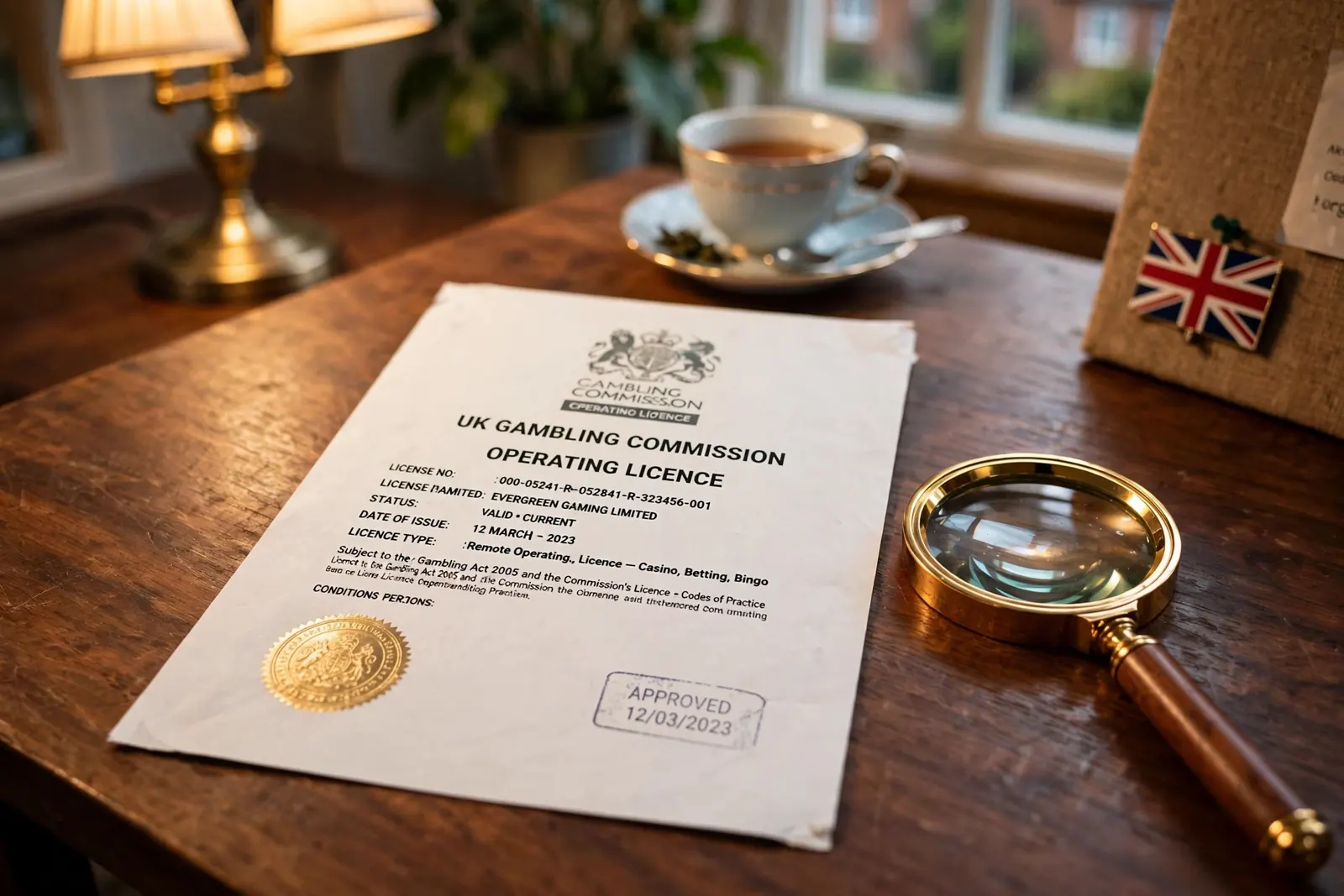
Offshore Casinos for UK Players: How to Assess Them
 Available in GB
An overseas licence does not authorise gambling for customers in Great Britain; this guide examines legal status, payments, offers and payout risks.

- Offshore Casinos and the UK: What the Label Actually Means
- Best casino sites in the UK
- Can You Play at One from the UK? The Awkward Legal Split
- How to Judge a Site When UKGC Protection Is Missing
- No-Deposit Offers: Read the Catch Before You Click
- Welcome Bonuses: Big Numbers, Real Wagering
- Crypto Payments: Speed Is Only Half the Story
- Bitcoin at Offshore Casinos: Check the Payment Terms
- Real-Money Play and Withdrawals: Where the Wait Happens
- Offshore Slots: Know the Limits Before You Play
- If an Offshore Casino Won’t Pay Out
Offshore Casinos and the UK: What the Label Actually Means
“Offshore casino” sounds like a description of where a website sits on a map. In the UK context, the more useful question is whether the operator holds a licence from the UK Gambling Commission. A foreign casino is an online gambling operator that takes British customers without that UKGC licence. Its servers, company address or gambling licence may be elsewhere; none of those details turns it into a UK-licensed casino.
That distinction is easy to miss. I used to see a licence badge and take it as a general stamp of approval. It is not. An offshore operator may hold a licence from another jurisdiction, but that does not authorise it to provide gambling services in Great Britain. The UKGC licence is the relevant permission for operators offering gambling facilities to customers in England, Scotland and Wales.
So “licensed offshore” and “licensed for the UK” are not interchangeable descriptions. An overseas regulator’s licence relates to the operator’s status under that regulator. It does not place the business under UKGC oversight, and it does not give the operator permission to serve the British market. Those are separate things. Small wording difference. Big consequence.
Non-UK-Registered Casinos: What the Label Means
The operator’s position is not the player’s position
There are two questions people often bundle together: whether an individual can use an overseas site, and whether that operator is allowed to offer its service in Britain. They are not the same question.
For operators, the rule is direct: without a Gambling Commission licence, an online gambling business cannot legally offer its services in England, Scotland and Wales. Providing gambling facilities to customers there without the required UKGC licence is not made lawful by holding a licence elsewhere. Advertising an unlicensed service in the UK is also prohibited.
That means a site can be real, operational and licensed in another country while still lacking the permission needed to offer gambling to British customers. Calling it an offshore casino describes that split; it does not settle whether the operator is entitled to serve the UK. A slick website can blur those details. The licence jurisdiction is the part to keep separate from the marketing.
What an overseas licence does—and does not—say
An offshore licence can tell you that an operator is licensed by an authority outside the UK. It cannot, by itself, tell you that the operator has a UKGC licence. Offshore casinos operate outside the UK Gambling Commission’s regulatory system, so their oversight is not UKGC oversight.
Non-UKGC Licensed Casinos: What the Label Means
I would read claims such as “internationally licensed” literally, rather than letting the phrase do extra work. It may describe an actual overseas licence, but it does not mean “approved for the UK”. A badge can look reassuring while answering a different question from the one a British customer needs answered. Marketing loves a broad phrase. Regulation is more specific.
The distinction also matters when a company operates several brands. A licence or business relationship connected with one part of a group does not automatically establish that every brand is authorised in Britain. You need to know which operator is providing the gambling service and which regulator, if any, has licensed that operator. The label “offshore” alone does not identify those details.
A reported example involving Santeda illustrates why the jurisdiction matters. Santeda held a Curaçao licence, but that licence did not authorise it to operate in either the UK or the United States. The presence of a foreign licence, then, was not a substitute for permission in those markets.
There was also a commercial arrangement behind Santeda’s brands: under its contract, SIS received a share of revenue generated by customers’ losing bets. That detail is separate from the licensing question, but it is a useful reminder that an online casino is not just a logo and a games lobby. There can be business relationships behind the brand, while the permission to offer gambling remains tied to the relevant regulator and market.
When you see “UK offshore casino” used as a label, read it as shorthand for an overseas operator taking British customers without a UKGC licence—not as a category of casino approved by the UK. An operator may be licensed abroad and still lack the authority required to offer gambling facilities in Great Britain. The difference is not cosmetic. It is the line between an overseas licence and permission to serve this market.
An offshore licence does not mean a casino is approved for the UK or subject to UKGC oversight.
Best casino sites in the UK
- x3betBonus: Welcome Pack 100% Up to £1.000 + 200 Free Spins · Payout speed: 1-3 business days
- BeOnBetBonus: 100% up to €500 + 100 FS · Payout speed: 1-3 business days
- NightWinBonus: £900 + 400 free spins · Payout speed: 1-3 business days
- DieselwinBonus: Welcome Pack 250% up to £4000 + 200 FS · Payout speed: 1-3 business days
- SpinFormulaBonus: 550% Up To £15,000 + 550 FS · Payout speed: 1-3 business days
- AmunbetBonus: Join now and get 450% up to 2,700 GBP + 450 FS · Payout speed: 1-3 business days
Can You Play at One from the UK? The Awkward Legal Split
The short answer is that a British player does not commit a crime simply by placing a bet with a casino licensed overseas. There is no UK law that makes an individual’s decision to use an overseas operator a criminal offence, and the player does not face a criminal penalty for doing so.
That is not the same as saying the operator is allowed to serve people in Britain. In England, Scotland and Wales, an operator offering gambling to customers must hold a UK Gambling Commission licence. Providing gambling facilities to British customers without one is unlawful for the operator; advertising those services in the UK is also restricted. The legal exposure sits on different sides of the transaction. Easy to muddle.
I used to read “not illegal for the player” as if it meant the whole arrangement was approved. It doesn’t. A person may be able to access a site and place a bet, while the operator remains outside the British regulatory system and is not entitled to offer its service here. So when people ask whether offshore casinos accepting UK players are legal, the answer depends on whose conduct they mean: the player’s or the operator’s.
Access is a separate, messier question. Some overseas-licensed casinos are expected to block British visitors. A report by gambling.com says that some do not enforce those restrictions and that users may get around them with a basic VPN. That is a reported account, not a dependable promise that a particular site will accept you, or that access will continue. A site can change its rules or block a connection; being able to open a page does not make the operator UKGC-regulated.
USA Casinos for UK Players: Licensing and Risks
That distinction matters if you are looking at offshore casinos for UK players and trying to work out what “accepting” actually means. It may describe a site that lets someone in Britain register or deposit, not one that is authorised to provide gambling here. Nor does the phrase tell you what happens if the operator changes its position later. Access is not approval. And it is not protection.
The safeguards are where the practical difference becomes harder to ignore. GamStop covers every UKGC-licensed operator. If you register for self-exclusion through GamStop, you are excluded from all UK-licensed gambling sites covered by the scheme. Casinos operating outside the UKGC’s remit are not part of GamStop, so that exclusion does not automatically stop you from registering with one of them.
I can see why that sounds like a loophole when you are frustrated and want to get back in. It is not a useful safety net. A specialist review has described how someone who has self-excluded through GamStop may be able to register with a foreign casino and deposit without those safeguards. The very ease of getting around an exclusion can be the danger. If you chose self-exclusion because gambling had become difficult to control, switching to a site outside the scheme does not undo the reason you signed up.
Risk of Relapse
Casinos operating outside the UKGC remit are not part of GamStop, meaning self-exclusion through the scheme does not automatically stop you from registering with them.
There is another important gap: offshore casinos do not provide the UKGC-mandated affordability checks. A UKGC-licensed operator has rules it must follow as part of the British system; a casino outside that system is not subject to those UKGC requirements. You should not assume it will step in with the same checks or protections. The fact that a site lets you play is not evidence that it has assessed whether the spending is affordable for you.
That leaves a blunt choice. You may not be breaking the law as a player by betting with an overseas operator, but you are doing so outside the protections that come with the UKGC framework. GamStop will not cover those casinos, and UKGC affordability requirements do not apply to them. Those are not small technical differences when you are deciding whether to deposit.
I wouldn’t treat “available in Britain” as a stamp of legitimacy, or “no criminal penalty for the player” as a recommendation. The two statements can be true at once: the player is not criminally liable merely for placing a bet, while an operator without the required licence is not permitted to offer gambling to customers in Great Britain. Knowing that split is the starting point for deciding whether the extra exposure is worth taking.
How to Judge a Site When UKGC Protection Is Missing
A polished site can look reassuring. I’ve learned not to treat a tidy homepage, confident wording or a security badge as proof that a casino offers the protections you might expect in Britain. With a non-GamStop casino, the first question is not whether the site looks professional. It is what its claims actually tell you—and what they do not.
Pay by Phone Casino Deposits in the UK: How They Work
Some non-GamStop casinos use encryption to protect personal and financial information. That matters: protecting data is a real part of running an online service. But encryption is not a promise that every part of the operation is safe, and it does not make an offshore casino subject to the UK Gambling Commission. Security and regulation are different things.
I try to separate the claims on a site into those two categories. If it says your information is encrypted, that is a claim about data security. If it says it is licensed, that is a claim about oversight by a regulator. Neither statement, on its own, means the operator holds a UKGC licence. Offshore casinos sit outside the UKGC system, and their security measures do not give you UKGC protections.
Read the licence claim closely
A specialist review has described many offshore platforms as licensed and regulated by authorities it considers reputable. Treat that as a description of those platforms, not as a blanket guarantee about every site you might find. Licensing claims can vary, and the word “regulated” is not a substitute for knowing which authority the operator names or what the claim is meant to cover.
When I assess an offshore casino site in the UK, I look for a clear statement of the operator’s licensing position and read the wording rather than stopping at a seal or a headline. A casino may have an offshore licence; that does not mean it is regulated by the UKGC or authorised to offer gambling services in Britain. A foreign regulator’s involvement does not make the site equivalent to a British-licensed casino.
Encryption protects your personal and financial data, but it is a security measure and not a substitute for regulatory oversight by the UK Gambling Commission.
That distinction matters when a site calls itself “legit”. The word can sound like a broad endorsement, when it may refer only to the operator’s own account of its licence or security. A site can make those claims and still leave you outside the protections attached to a UKGC-regulated operator. “Licensed” is not the whole story.
Look beyond reassuring language
Descriptions such as “secure”, “trusted” or “fully regulated” are easy to put on a page. I would want the site to say what each one means, rather than allowing a general assurance to do all the work. If the wording does not identify the relevant regulator or explain the scope of its claim, do not fill in the gaps for the operator.
There is another important gap: offshore casinos do not provide UKGC-mandated affordability checks. That does not mean you should assume a site has no checks of any kind; it means you should not mistake any checks it chooses to describe for the UKGC requirements. Nor should encryption or an offshore licence be presented as a substitute for those safeguards.
For me, a useful assessment is less about finding a “top” offshore casino site and more about noticing what the page cannot establish. A list of sites, a confident licence claim and technical language about protecting data may help you understand what an operator says about itself. They do not, by themselves, demonstrate UKGC oversight or give you the protections of a UKGC-licensed site.
Offshore casino sites for UK players: what to know
So if you are comparing offshore casino sites, keep the standards separate: data security, the operator’s stated licence, and UKGC regulation are not interchangeable. I would not call a site safe or equivalent to a British-licensed casino on the strength of its own description. Check the claim, recognise its limits, and make your decision with the missing UKGC protections in view. No badge fixes that.
No-Deposit Offers: Read the Catch Before You Click
A “no-deposit bonus” sounds like money arriving with no strings attached. I read it more narrowly: it is an offer presented without requiring an initial deposit. That does not tell you whether the bonus can be withdrawn, what you must do before cashing out, or whether the offer is available to you at all. The label is only the opening line.
No-deposit offers are one of several promotion types identified in a specialist casino review of foreign casinos serving UK players, alongside deposit matches, free spins packages and cashback. That puts them in context: they are a promotional format, not a sign that a casino has made an exception to its rules for you.
Before registering, find the offer’s full terms and read them as part of the decision, not as fine print to skim after clicking. Check how the bonus is claimed, who is eligible, whether any play is required before a withdrawal, and what conditions apply to winnings. If the terms are unclear, hard to find or different from the wording used to advertise the offer, treat that as a reason to stop and investigate—not as a puzzle you need to solve after signing up.
Do
- Read the full terms before registering
- Check eligibility and withdrawal conditions
- Verify if winnings require qualifying play
Don’t
- Rely on the “no-deposit” headline alone
- Skim the fine print after clicking
- Assume a bonus is automatically withdrawable
I would also separate three things that are easy to blur together: the bonus itself, any winnings linked to it, and cash you can actually withdraw. An offer may advertise a bonus without asking for a deposit, but that wording alone does not establish that the bonus is withdrawable or that winnings can be cashed out without meeting conditions. “Free” is the sales word. The terms decide what it means.
That distinction matters particularly at an offshore casino. These operators are not regulated by the UK Gambling Commission, and they do not provide UKGC-mandated affordability checks. A bonus offer does not change either point. Reading the promotion carefully can help you understand its conditions; it cannot give you UKGC protection or make the operator part of the British licensing system.
I would not compare offers by the headline alone. A larger-looking promise can be less useful if the conditions do not suit you, while a modest offer is not automatically a fair one. Look for plain explanations of what counts, what happens if you decline or withdraw, and whether the promotion has separate rules from ordinary play. If you cannot tell what the offer permits, assume you do not yet know enough to accept it.
One more small trap: “no deposit” describes how the promotion is presented, not the whole account relationship. You may still be asked to provide identity details or follow account rules before using the site. Do not hand over information or make a decision on the strength of the headline; first establish what the operator asks of you and what the offer’s terms actually say.
A sensible test is simple: could you explain, in your own words, what you receive and what you must do before any related winnings become withdrawable? If not, leave the offer alone until you can. No bonus is worth accepting blind.
Welcome Bonuses: Big Numbers, Real Wagering
A large welcome offer can look like a straightforward head start. I used to read the headline first and the conditions later. That order makes the offer feel better than it is.
A specialist review attributes larger offshore welcome packages to operators sitting outside UKGC restrictions on bonus terms, wagering requirements and promotional language. That is an explanation for the bigger figures, not proof that an offer is generous once you try to turn it into withdrawable money. Offshore casinos are not regulated by the UK Gambling Commission, and they do not provide UKGC-mandated affordability checks.
With a deposit match, the headline amount is only part of the calculation. The wagering requirement tells you how much you must stake before bonus funds can be converted to cash you can withdraw. A specialist review’s worked example uses a 100% match on a £100 deposit, with a 35x wagering requirement: the required qualifying bets total £3,500. That is turnover, not a fee, and it does not mean you will get that amount back.
A smaller bonus can carry the same sort of burden. In another worked example from a specialist review, a £20 bonus at 35x requires £700 in qualifying bets before you can cash out. The figures make the multiplier easier to see: it applies to the bonus amount, not just the size of the advertised headline.
Wagering Requirements
Step 1: Identify the bonus
Take a £100 deposit match bonus with a 35x wagering requirement.
Step 2: Calculate the turnover
Multiply the bonus amount by the requirement: £100 × 35 = £3,500.
Step 3: Understand the result
You must place £3,500 in qualifying bets before the bonus funds can be converted to withdrawable cash.
Before depositing, read the full terms and check what counts as a qualifying bet, how the requirement is calculated, and what conditions apply to cashing out. A headline can say “100%”; the practical value depends on the rules attached to it. If those rules are hard to find or unclear, I would not treat the advertised amount as money in my balance.
There is no trick in the maths. The trick is forgetting to do it.
Crypto Payments: Speed Is Only Half the Story
Crypto can look like the obvious payment choice at an offshore casino: the headline is a quick withdrawal, without waiting for a bank transfer. But the speed claim is only one part of the decision. You also need to think about what happens to the value of the money while it is held or moved in cryptocurrency.
A specialist casino review reports that crypto withdrawals at foreign casinos can clear in under an hour, faster than fiat withdrawals. Treat that as a reported possibility, not a promise for every operator or transaction. A casino may have its own processing steps, and the stated speed does not tell you whether a particular withdrawal will be approved or when the funds will reach your control. Fast is not the same as certain.
The other side is volatility. The value of a cryptocurrency can change, so the amount you put in and the value you later receive may not line up as neatly as they would with a fixed pound balance. A fast transfer does not protect you from a move in the market. If you are measuring a gambling budget in pounds, that uncertainty matters: you could be dealing with a different pound value by the time you want to use or exchange the funds.
I used to hear “instant” and stop reading. That was the mistake. A payment route can be quick and still leave you with a separate risk to weigh. Before depositing, check which currencies the casino accepts, how it describes withdrawals, and whether the terms explain any conversion or processing arrangements. Do not assume that a crypto logo tells you the whole story, or that a short advertised time applies to every stage.
There is also a regulatory distinction worth keeping in view. A casino taking crypto from UK players is still an offshore operator, not a UK Gambling Commission-regulated site. Crypto does not add UKGC protection, and offshore casinos do not provide the UKGC-mandated affordability checks. The payment method changes how money moves; it does not change who oversees the casino.
So I would compare speed with value risk, not treat speed as a verdict. If the pounds-and-pence value is what matters to you, volatility may outweigh a quicker withdrawal. If you cannot tell from the terms how the casino handles the payment, pause before sending funds. Less flashy. More useful.
Bitcoin at Offshore Casinos: Check the Payment Terms
Bitcoin may appear as a deposit option at an offshore gambling casino, but seeing the familiar symbol beside “Make a Deposit” does not tell you what happens after you send funds. I would treat it as a payment route to investigate, not a shortcut around the operator’s rules. The casino’s own terms matter more than the word “Bitcoin” on a cashier page.
Bitcoin Deposit Check
- Confirm Bitcoin is accepted for deposits
- Verify if withdrawals are allowed via Bitcoin
- Check if Bitcoin deposits qualify for bonus offers
- Review the operator’s specific payment terms
Before depositing, read the payment section and look for the details that affect your particular transaction: whether Bitcoin is accepted for deposits, whether the operator also allows withdrawals through it, and whether any separate conditions apply. Do not assume that a deposit method is automatically available for cashing out. If the wording is vague, ask the operator to clarify it before you transfer anything, and keep a copy of the relevant terms.
Bonuses need a separate check. An offshore casino bonus in the UK may come with conditions tied to payment methods, and the offer may not apply to a Bitcoin deposit. Read the promotion’s terms rather than relying on the headline. If you accept an offer, establish what needs to happen before bonus funds can become withdrawable and whether the payment method changes those rules. “Flexible” can mean a lot of things.
The licence question is separate from the payment choice. An offshore casino is not regulated by the UK Gambling Commission, even if it accepts Bitcoin or displays another regulator’s licence. That means you should not mistake a payment option or an offshore casino licence for UKGC protection. Offshore operators also do not provide UKGC-mandated affordability checks. Keep that in view before deciding whether to open an account or deposit.
I would also avoid treating a Bitcoin deposit as a way to bypass a gambling limit or self-exclusion decision. If you have chosen to stop, a different payment method does not change that choice. Non-GamStop casinos are outside GamStop’s UKGC scheme, which is precisely why they should not be treated as a continuation of the safeguards available at UK-licensed sites.
The practical rule is simple: check the casino’s current payment and bonus terms, make sure you understand what the operator says about deposits and withdrawals, and do not send money while those points are unclear. Bitcoin is still money at risk once it leaves your control. No clever label changes that.
Real-Money Play and Withdrawals: Where the Wait Happens
Withdrawing real-money winnings from an offshore casino is not just a question of pressing a button. The payment route matters, and so do the operator’s own processing steps. I’ve learned to check both before depositing; the word “instant” can hide a wait that starts before the money even reaches your bank.
A specialist review of payment timelines reports that most foreign casinos process Skrill and Neteller withdrawals within 24 hours, with many handling them in under 12 hours. That is the operator’s processing time, not a promise about when funds will appear in your account. The e-wallet provider may have its own steps, so check what the casino means by “processed” and “paid”.
Bank transfers are described as the slower route: they can take five to seven business days, and some casinos add a processing delay before the transfer is sent. Weekends or bank holidays can also make the calendar feel longer, but the key detail is whether the operator’s stated timeline includes its own pending period. Read the cashier page and withdrawal terms together.
The figures are only part of the picture. A specialist review notes that withdrawal limits, pending periods and verification procedures vary considerably between operators. Look for the minimum and maximum you can request, whether a withdrawal can sit pending, and what documents may be requested. If the terms are unclear, ask the operator before you play rather than after a balance is waiting to be released.
E-wallets (Skrill/Neteller)
Processed within 24 hours, with many handled in under 12 hours.
Bank Transfers
Slower route, typically taking five to seven business days.
Operator Processing
Varies by site; may include pending periods and verification procedures.
There is another difference worth keeping in view: offshore casinos are not regulated by the UK Gambling Commission, and they do not provide UKGC-mandated affordability checks. A smooth-looking cashier does not change that. I would not treat a quick processing estimate as a guarantee or as proof that every step will be friction-free.
Before making a deposit, check the available withdrawal methods, the processing window for each, and any operator-specific conditions. Keep a record of the terms you saw. It is a small bit of housekeeping, but it can save you from confusing an operator’s approval time with the time a payment method needs to deliver the money.
That’s the wait.
Offshore Slots: Know the Limits Before You Play
The word “slot” can make an offshore site look familiar: reels, a spin button, a balance on screen. But an offshore casino is licensed outside the UK and is not regulated by the UK Gambling Commission. That changes the rules you can rely on, even if the games look much like those on a British site.
In Britain, UKGC-licensed operators must follow specific online slot rules. Autoplay is banned, each spin must last at least 2.5 seconds, and the maximum stake per game cycle is £5 for adults aged 25 and over and £2 for players aged 18 to 24. The £5 limit for all adults took effect on 9 April 2025. These are British requirements for regulated play; you should not assume an offshore site follows them.
That doesn’t tell you what a particular offshore slot does. I wouldn’t infer its features, pace or stake options from a game’s name or from a site’s “UK-friendly” wording. Read the game and account terms before depositing, and be clear about which operator is providing the service. Familiar-looking screens are not the same as familiar protections.
Non-GamStop European Casinos: What the Label Means
There’s a wider gap, too. Offshore operators do not provide UKGC-mandated affordability checks, and they are outside the Commission’s regulatory system. So a British player considering offshore casino slots should not treat the absence of a limit or prompt as evidence that a level of play is safe or approved. It may simply mean the UK safeguards are not there.
I’ve learned not to let a polished lobby do the thinking for me. If you choose to play, set your own boundary before opening a game, and stop if it no longer feels like entertainment. Slots can make a quick session feel effortless. The consequences can linger.
If an Offshore Casino Won’t Pay Out
A withdrawal can look straightforward right up to the point an operator refuses to release it. That is the risk I keep in view when considering an offshore casino payout: a quick payment route says nothing about whether the casino will honour the request.
Gambling.com has reported cases in which unlicensed sites simply withheld customers’ winnings, leaving those players without legal recourse. That is a report of particular cases, not a claim that every offshore operator behaves that way. Still, once your money is held by a business outside the UK Gambling Commission’s system, you cannot rely on UKGC regulation or enforcement to resolve the dispute.
Keep records from the start: the casino’s terms, account messages, deposit confirmation and withdrawal request. If a payout is challenged, save the operator’s explanation and any documents you sent. Read the withdrawal conditions before depositing, too; a rule you only discover after winning is a nasty surprise.
A polished site, a licence from elsewhere or reassuring customer-service replies cannot provide the protections of UKGC oversight. These operators also do not offer UKGC-mandated affordability checks. That matters before you deposit, not only when something goes wrong.
I used to treat a pending withdrawal as money already on its way. I wouldn’t now. Until it reaches you, it remains under the operator’s control. And if the operator refuses to pay, having chosen a fast payment method will not make it honour the withdrawal.
Are bonuses at foreign casinos actually better than at UKGC-licensed sites?
Yes, foreign casinos often offer larger welcome bonuses because they are not subject to UKGC restrictions on bonus terms and promotions. Check the wagering requirements: a larger bonus may require substantial betting before you can withdraw.
What happens if I have a dispute with a foreign casino?
You are outside the UKGC’s regulatory system, and some customers of unlicensed sites have been refused payouts with no legal recourse. An overseas licence does not provide UKGC oversight.
Are winnings from foreign casinos taxable in the UK?
No, gambling winnings are not subject to UK income tax, whether the casino is UKGC-licensed or not.
Can I use cryptocurrency at foreign casinos from the UK?
Yes, some foreign casinos offer cryptocurrency as a payment option. Crypto withdrawals can clear in under an hour, though the value may fluctuate.
What is the fastest way to withdraw from an online casino in the UK?
E-wallets are generally the fastest option in the UK, with most operators processing withdrawals within 24 hours. At foreign casinos, crypto withdrawals can be faster still, often clearing in under an hour.
Are gambling winnings subject to income tax in the United Kingdom?
No, gambling winnings are not subject to income tax in the UK, regardless of whether the operator is UKGC-licensed.
Created by the "Casino not on Gamstop" editorial team.