Pay by Phone Casino Deposits in the UK: How They Work
 Available in GB
See how charges reach your mobile account, how payment limits affect play, and why phone credit may not suit withdrawals.

- What happens to a phone-credit deposit
- Best casino sites in the UK
- The deposit cap changes the sums you can play with
- Playing on your phone: browser or app?
- Check the licence before you enter payment details
- Set a limit before a small deposit turns into a habit
- Phone credit and slot bonuses can be a costly mix
- The catch when you want your winnings back
- At checkout, watch for the network’s extra charge
- “No deposit” offers still need a careful read
- When phone credit is not the right way to deposit
What happens to a phone-credit deposit
A Pay by Phone deposit does not come from a bank card or a balance held in a casino wallet. The amount is charged through your mobile account instead. If you are on a monthly plan, it appears on your next phone bill. If you use pay-as-you-go, it is taken from the credit already on your phone.
That is the basic distinction behind mobile casinos that accept phone credit: you are using your mobile account as the route for the payment. The money is still being used to fund a gambling account, but you do not hand over card details for that deposit. I find it helps to think of it as moving part of your phone spending into a casino balance, not as free credit or a special kind of casino money.
The monthly-bill version can be easy to overlook. You may make the deposit while using your phone, then see the charge when the bill arrives rather than at the moment you pay the bill. It has not disappeared; it has been added to what you owe for mobile service. If you share responsibility for a household bill, or someone else checks it, that timing is worth bearing in mind. The phone account is where the charge lands.
Pay-as-you-go works differently in one practical sense: there is no later bill for that amount. The deposit comes out of the credit you have already added to your phone. Once it has been deducted, that credit is no longer available for other uses. I would not treat the balance shown before depositing as money set aside just for calls or data if I have also chosen to use it for gambling.
Neither route changes what the deposit is for. It is a payment into your casino account, not a reduction in the cost of your mobile plan and not a payment that can be ignored because it appears beside phone charges. The distinction sounds obvious, but it is easy to mentally separate a small phone-based payment from ordinary spending. I have done that myself: the payment felt less real because I did not reach for a bank card. It was still money leaving my budget.
Offshore casino sites for UK players: what to know
Before using Pay by Phone, be clear about which kind of mobile account you have and who is responsible for it. On a monthly plan, the amount will be reflected in the next bill. On pay-as-you-go, it will reduce the credit on the account. If you are uncertain which applies, check your mobile account information before making a deposit rather than assuming the payment will be handled a particular way.
There is also a useful difference between the moment you choose to deposit and the moment you feel the cost. A pay-as-you-go user may notice the lower credit balance. Someone paying by monthly bill may not see the effect until later. In both cases, the charge is real even if it is bundled into phone spending or appears after the gambling session. A quick mental note of what you have put in can stop the phone account from making that spending feel invisible.
Pay by Phone can sound like a shortcut because the payment is tied to the handset you already use. But the handset is only the route. It does not turn a casino deposit into a phone service, and it does not make the amount any less part of your gambling spend. When I remind myself of that, I am less likely to think, “It was only phone credit.” It was a deposit.
Online Casino No Registration UK: What It Means
So the simplest way to understand mobile casinos using phone credit in the UK is this: the casino receives a deposit, while your mobile account carries the charge. With a monthly plan, it is added to the bill you will receive. With pay-as-you-go, it is deducted from the credit you have available. Keep that in mind before pressing to pay. The payment may be made on a phone, but the cost still belongs in your own spending decisions.
Best casino sites in the UK
- x3betBonus: Welcome Pack 100% Up to £1.000 + 200 Free Spins · Payout speed: 1-3 business days
- BeOnBetBonus: 100% up to €500 + 100 FS · Payout speed: 1-3 business days
- NightWinBonus: £900 + 400 free spins · Payout speed: 1-3 business days
- DieselwinBonus: Welcome Pack 250% up to £4000 + 200 FS · Payout speed: 1-3 business days
- SpinFormulaBonus: 550% Up To £15,000 + 550 FS · Payout speed: 1-3 business days
- AmunbetBonus: Join now and get 450% up to 2,700 GBP + 450 FS · Payout speed: 1-3 business days
The deposit cap changes the sums you can play with
The main thing to check before choosing Pay by Phone is whether its deposit size fits what you actually intend to put into your account. A low entry point can make the method look flexible, but the per-transaction ceiling may be the more important figure if you want to deposit more than a small amount. I’ve learned not to treat “available” as the same thing as suitable.
Most apps accept a minimum deposit of £5, with some allowing £2.
A specialist review of mobile casino payment options reported that most apps accept a minimum deposit of £5, with some allowing £2. Those figures are useful as a guide, not a promise about every operator. The minimum shown in the payment area is the one that matters for the account you are using. If you have a particular sum in mind, check that the cashier accepts it before you get as far as confirming the payment.
The difference between those minimums is modest in pounds, but it can matter when you are trying to keep a deposit deliberately small. If an app accepts only £5, you cannot assume that selecting a smaller amount will work just because another casino allows it. Equally, seeing a £2 minimum elsewhere does not mean you will find that option everywhere. I would rather check the displayed minimum than build a plan around a figure from another mobile casino.
The other end of the scale is more limiting. A specialist review reported that most operators cap Pay by Phone deposits at £30 per transaction. That is a ceiling on one transaction, not a suggested amount to deposit and not a guarantee that every operator uses the same cap. It gives you a realistic sense of the method: it is built around relatively small deposits, rather than moving a large sum into a casino account in one go.
Foreign Casinos for UK Players: Licensing and Risks
That distinction matters if your usual deposit would be above the cap. A £30 ceiling could mean Pay by Phone does not match the amount you want to put in at once. Don’t assume that you can simply repeat the payment to get around a limit: the permitted amount and any additional restrictions are for the operator and payment route to set. Look at the amount the cashier actually allows, and decide whether that fits your plan without relying on a workaround.
I used to focus on whether a payment option appeared in the list and leave the size question until the last step. That is backwards. A payment method can be present and still be a poor fit for the amount you want to deposit. The minimum answers, “Can I make a small deposit?” The cap answers, “Can I deposit the sum I had in mind in one transaction?” They are separate checks.
It also helps to compare the figures with your own intention, rather than with a bonus banner or a suggested amount on screen. If you want to deposit only a small sum, a low minimum may be enough to make Pay by Phone workable. If you want to deposit more than the reported £30 ceiling, the method may not suit that particular transaction. Neither outcome makes the method universally good or bad; it is simply a question of whether its boundaries match yours.
Treat the £5 minimum and £30 cap as reported guideposts, not terms that apply automatically across every casino. The operator’s cashier should show the available amount before you confirm. If the choices there do not fit, pause rather than choosing a different sum just to get the payment through. A deposit limit is useful information, not an invitation to adjust your plan on impulse.
Most operators cap Pay by Phone deposits at £30 per transaction.
For me, that is the practical test when comparing a mobile casino that accepts payment from phone credit: check the minimum, check the transaction ceiling, then decide whether the amount in between is genuinely what you want to deposit. The method may be convenient for a smaller deposit, but its narrow range can make it unsuitable for a larger one. Small sums only.
Playing on your phone: browser or app?
Paying with phone credit and playing on a phone are two separate parts of the experience. Once you are signed in, the important question is how the mobile casino runs: in your browser, through an app, or inside an app that is mostly displaying a web page. Those options can feel different when you tap a game or try to move around the lobby.
Most UKGC-licensed casinos offer instant play through a mobile browser. You can open the site on your phone and start playing without first installing an app. That is useful if you want to try the mobile layout before deciding whether you want an app on your home screen. It also avoids treating the app as a requirement: browser play is a normal way to access a mobile casino.
I used to assume that an app would automatically feel better. It sounds like the obvious upgrade: download it, open it, play. But the word “app” does not tell you everything about what is running underneath. Some casino apps use a native wrapper, while others rely on a WebView embed. They may look similar on the screen, yet respond differently when you interact with a game.
Online casinos with no sister sites in the UK
A specialist review comparing these formats reported that a native wrapper’s spin button responded as soon as it was touched, while a WebView embed had a noticeable half-second delay. That is a specific comparison, not a promise that every app will behave the same way. Still, it explains why two mobile casinos can feel unlike each other even when both have an app and both open the same kind of game.
A delay is most noticeable when you are tapping repeatedly or reacting to something happening on screen. It can make play feel less direct; a quicker response can feel more immediate. That does not make one format a better choice for every person. If you play casually, you may barely care. If you notice every pause, the distinction may matter more than whether the app icon looks polished.
The browser has its own practical appeal. There is no app to install before you can see how the site behaves, and you can judge the layout in the same place you would normally browse. The trade-off is that browser play remains browser play: you are using the mobile site rather than a separately opened app. Whether that bothers you depends on how you use your phone, not on a universal rule about which option is best.
I would test the actual experience rather than choosing by the label. Open the casino in your phone’s browser and look at whether the menus are legible, whether the game fits the screen, and whether moving between the lobby and a game feels straightforward. If there is an app, compare it on the same device. Pay attention to the controls, not just the first screen. A smart-looking lobby can still feel clumsy once you start tapping.
Do
- Test the layout in your phone’s browser
- Compare the app’s controls and navigation
- Check if the game fits the screen
Don’t
- Install an app just because it is promoted
- Assume an app always performs better
- Rely on “seamless experience” claims
You do not need to install something just because a casino promotes an app. Nor does browser access mean the casino is a poor mobile option. The relevant difference is how comfortably you can navigate and how promptly the game responds. If you are trying to find mobile casinos that accept phone-credit payments, remember that the payment route does not tell you whether the site will run smoothly. Check the playing experience separately.
There is also a difference between an app being available and an app being worth using. A native wrapper may respond more directly than a WebView embed, according to that specialist comparison, but an app’s name alone does not reveal which format it uses. Avoid turning one review into a blanket verdict. A particular phone, browser, connection and game can all shape what you notice, so your own test is more useful than assuming every app behaves alike.
For me, the sensible approach is simple: start in the browser if you want to get playing without installing anything, then try the app if you want to compare. Watch for lag in the controls and awkward navigation, not grand claims about a “seamless” experience. If tapping feels natural and the screen is easy to use, that may be enough. If it feels like work, an app label will not rescue it.
No magic fix. Just test it.
Check the licence before you enter payment details
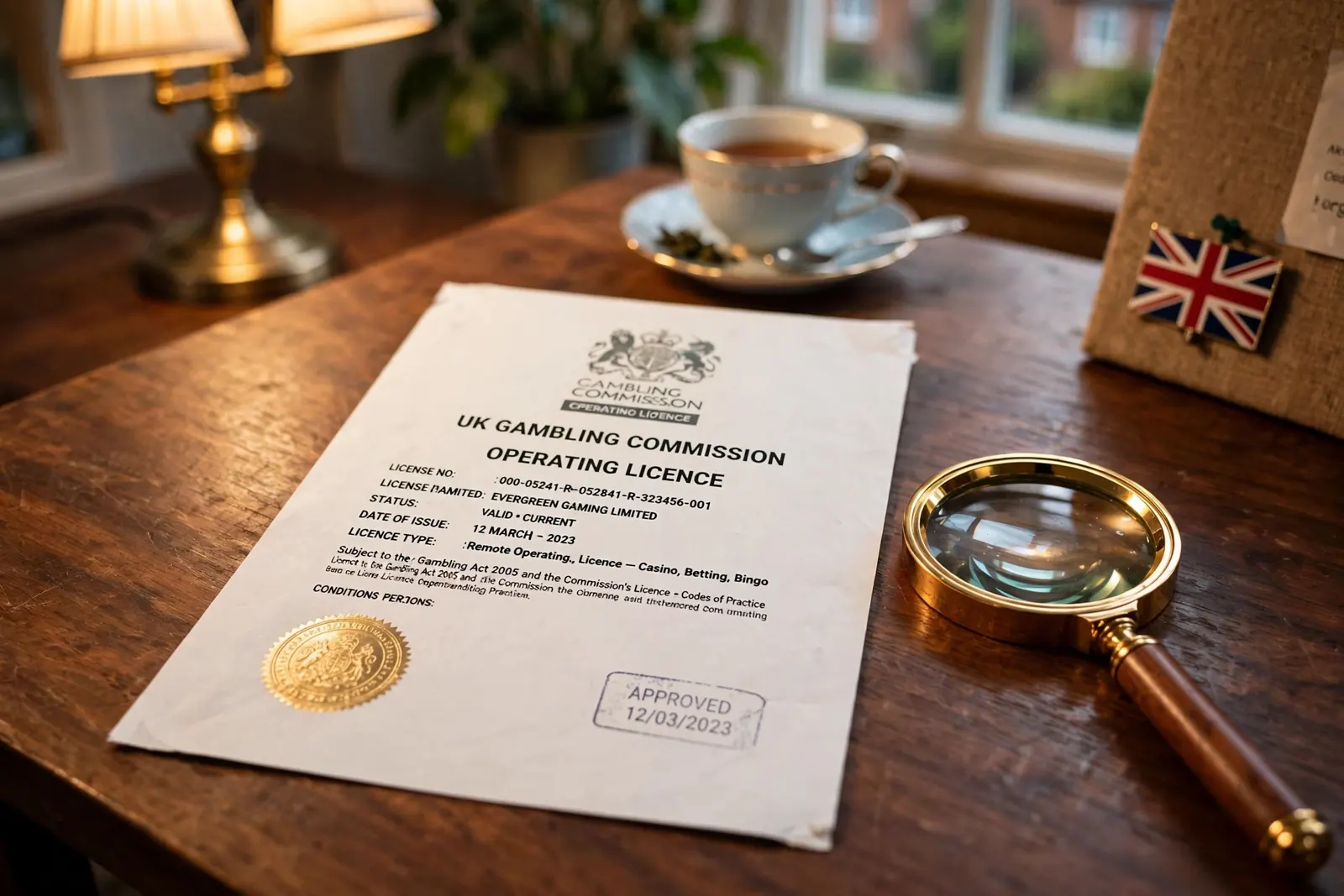
A casino can look polished on a phone and still leave you with a basic question: who is responsible for it? Before choosing a phone-credit deposit casino in the UK, I check the operator’s UK licence. It is not a guarantee that every part of the experience will suit you, but it is a meaningful starting point for deciding whether the site belongs in the UK’s regulated market.
Offshore Casinos for UK Players: How to Assess Them
You can find the operator’s UK Gambling Commission licence number at the bottom of its homepage. Scroll right down rather than relying on a logo, a claim in an advert, or a badge beside the cashier. Note the number, then look up the operator on the UKGC register. Make sure the licence details correspond to the casino you are actually using; a familiar-sounding brand name is not enough on its own.
That small check is easy to skip when you are on a mobile screen. I know the temptation: you have found a site that appears to accept Pay by Phone, and you want to get on with it. But a payment option does not tell you whether the operator is licensed to serve people in Britain. Treat the licence check as separate from the question of whether a casino phone-credit deposit is available.
The distinction matters because online casinos in the UK are legal when they operate under the required local licence. A UK Gambling Commission licence is the strongest consumer protection in this market. It places the operator within the UK regulatory system, rather than leaving you to rely on the site’s own promises about how it handles customers.
That protection is relevant even if you are considering a small phone-credit deposit or searching for a mobile casino pay-with-phone-credit no-deposit offer. The method of payment does not change the operator’s obligations. Nor does a “no deposit” label prove that a site is licensed. Check the business behind the offer, not just the wording that caught your eye.
Verify Operator Licence
- Find the UKGC licence number at the bottom of the homepage
- Look up the operator on the official UKGC register
- Confirm the licence details match the casino you are using
I would also look at whether the details are clear and consistent. Does the homepage identify the operator and show a licence number? Does the register entry match the business named on the site? If the information is missing, hard to find, or appears to describe a different operator, I would pause rather than try to explain it away. A rushed checkout is a poor moment to discover that you have not established who you are dealing with.
A UK licence is not a promise that you will win, that every dispute will go your way, or that the site will never make a mistake. It does mean the operator is subject to the UK’s gambling rules. That is a more solid basis for choosing where to play than a slick design, a payment logo, or an offer dressed up as “easy”. I learned to distrust the sales pitch first. Check the licence.
If you are comparing a casino that accepts phone-credit deposits with another mobile casino, use the same check for both. Don’t assume that a result in a search, an app listing, or a recommendation has done it for you. Open the operator’s own homepage, find the licence number at the bottom, and confirm it against the UKGC register. If the operator cannot be matched to a UK licence, do not treat it as a legal UK casino.
This is a trust check, not a way to judge whether Pay by Phone is the right payment method for your circumstances. It helps you establish that the operator is accountable under the rules that apply in the UK before you hand over details or create an account. Keep the sequence simple: identify the operator, verify the licence, then decide whether you want to proceed.
Casino sites not registered with GamStop UK
Some links on this site may be affiliate links. If you click one and deposit, we may be paid; that does not change the need to check the operator’s UK licence for yourself.
Set a limit before a small deposit turns into a habit
Paying from phone credit can make a deposit feel separate from the money you keep in a bank account. That separation is easy to misread. The charge still counts as gambling spend, whether it appears on a mobile bill or comes out of pay-as-you-go credit.
I used to focus on the amount I was adding right then and ignore the pattern. A small payment can seem harmless on its own; repeating it is where the total starts to matter. A deposit limit gives you a boundary across time, not just a decision to make at checkout.
UK Gambling Commission rules require licensed operators to provide deposit limits. You can set one in your account settings for a daily, weekly or monthly period. New customers must also be prompted to set a financial limit before making their first deposit. If you’re using a mobile casino with phone credit, look for the limit controls in your account rather than assuming the payment method will manage your spending for you.
Choose a period that matches how you keep track of money. A weekly limit may be easier to relate to regular spending; a monthly one can make the broader pattern clearer. The right choice is personal. What matters is setting a ceiling you can live with before you are caught up in a session, then checking that the account shows the setting you intended.
UK Gambling Commission rules require licensed operators to provide deposit limits, which you can set for daily, weekly, or monthly periods.
There’s a difference between a limit and a target. Setting a maximum does not mean you need to spend up to it, and a limit should not be treated as spare money waiting to be used. I’ve made that mistake with budgets elsewhere: the number meant to protect me became a number I tried to reach. Don’t do that.
When you review your account, check the period as well as the amount. A daily figure and a monthly figure do different jobs, and choosing one without noticing the time frame can give you a false sense of control. If you play slots using phone credit, include those deposits in the same picture as your other gambling spend rather than treating them as an exception.
It is also worth revisiting the setting when your circumstances change, not only after a run of deposits. The point is to decide while you’re calm, away from the quick prompts and the urge to carry on. A limit cannot make gambling risk-free, but it can put a clear boundary in place. Small deposits still add up.
Phone credit and slot bonuses can be a costly mix
A bonus can make a small deposit look more generous than it is. I’ve learned not to treat the amount shown beside an offer as money I can simply withdraw. The terms can put several conditions between accepting a promotion and receiving any winnings.
A specialist review I checked highlighted four details that can affect bonus withdrawals: wagering requirements, maximum bet limits, game weighting and maximum cashout caps. They’re worth reading together, not as fine print you can skim after claiming. Each one can change what you need to do, which games count, or how much of a balance may be eligible to cash out.
International Casinos for UK Players: UKGC Risks
Wagering requirements determine how much qualifying play is needed before a bonus can be released. Check whether the requirement applies to the bonus, the deposit, or both; the wording matters. A bonus balance can remain restricted even while the games let you keep playing. That can make the offer feel like usable cash when it isn’t.
Then look for a maximum bet while the bonus is active. If you exceed it, the terms may affect whether winnings qualify. I wouldn’t assume a bet is allowed just because the slot accepts it. Find the rule before spinning, and check whether it applies to each round or to the bonus period as a whole.
Game weighting is another easy detail to miss. A slot may contribute differently from another game towards the wagering requirement, or may not count at all. So “play slots” doesn’t necessarily mean every slot advances the offer in the same way. Check the eligible-games list and the contribution rules before choosing what to play.
Finally, look for a maximum cashout. Even if you satisfy the wagering conditions, a cap can limit the amount you can withdraw from bonus play. “Extra value” needs quotation marks here: the headline offer tells only part of the story.
When I’m considering a bonus alongside phone-credit play, I read the conditions before opting in and ask myself whether I’d still make the deposit without the promotion. If the rules are hard to find or unclear, I leave it alone. Less tempting, perhaps. Less regret, too.
Casino not on Gamstop may receive payment if you click a link and deposit.
Bonus Withdrawal Conditions
- Wagering requirements determine the play needed to release a bonus
- Maximum bet limits can affect whether winnings qualify
- Game weighting means not all slots contribute equally
- Maximum cashout caps may limit the final withdrawable amount
The catch when you want your winnings back
A deposit and a withdrawal are not always two sides of the same button. The payment method you use to put money in is almost always the one the casino expects to use when sending money out. That can make Pay by Phone awkward if you are thinking of it as a complete way to manage your balance, rather than just a deposit option.
Before you pay, open the cashier’s withdrawal information and check what it says about payment routes. Look for whether phone-credit deposits can be withdrawn through the same channel, or whether the operator requires another method. Don’t assume the answer from the deposit screen. I’ve learned that “supported” can mean only that you can get money into the account.
There is a practical difference between seeing a balance in your casino account and having funds arrive in a payment account you can use. The operator may also need to confirm that the withdrawal is going to you. If the route is unclear, ask customer support before making a deposit, and keep the reply. It is a dull check. Still worth doing.
A withdrawal request should stay put
Once you request a withdrawal from a UK-licensed casino, the operator must not cancel or reverse it unless you actively agree. That matters if a site presents a reversal button or offers to return the money to your playable balance. A request to withdraw is not permission for the casino to put the funds back into play.
Online casino payouts in the UK: how RTP works
Read the wording carefully. If you want the money, do not approve a reversal just because it is offered as a quick fix or a convenience. If you did not consent and the request is reversed, raise it with the operator and keep a record of the conversation.
Timing depends on the method and the operator, so don’t treat a cashier estimate as a promise. A specialist review has described under 24 hours as a realistic benchmark for e-wallet withdrawals at UK-licensed operators; that is a benchmark from that type of source, not a guarantee for your account, and it says nothing about Pay by Phone withdrawals. Check the operator’s own terms for the route you plan to use.
The useful question is not only “Can I deposit from my mobile?” It is whether you understand how a withdrawal would work before you put money in. If you cannot find a clear answer, pause. Better a boring question now than a frustrating one later.
At checkout, watch for the network’s extra charge
The amount shown beside the deposit button may not be the whole cost of paying by phone. Some mobile networks add a separate premium-rate fee, so check the final confirmation screen before you approve the transaction. It is an easy detail to miss when you are focused on the casino’s deposit amount.
A specialist review reported fees in the region of £0.50 to £1.50 for some Pay by Phone transactions. Treat that as a reported range, not a promise about what your network will charge: the fee can depend on the carrier and the payment flow being used. If the checkout does not make the total clear, pause rather than assuming the charge will match the amount you selected.
Some mobile networks may add a separate premium-rate fee, typically between £0.50 and £1.50, to Pay by Phone transactions.
I would look for two figures before confirming: the deposit going to the casino and any additional amount charged by the network. If the screen only shows one, read the payment wording carefully and check your network’s information. The extra fee may be collected through the same phone account, but it is not casino credit; it is an added cost of the payment route.
This matters most when you are making a small deposit, because even a modest extra charge changes the total leaving your account. A payment can feel like a quick tap, then show up as more than you expected on your bill or against your pay-as-you-go balance. Not a great surprise.
If you cannot establish the full charge before confirming, choose another payment method or leave the transaction there. The casino’s displayed deposit amount is not enough on its own to tell you what the phone payment will cost. Check the final total, check who is charging each part, and only approve it when those details make sense to you.
“No deposit” offers still need a careful read
“No deposit” sounds like money you can simply claim and cash out. I used to read it that way. The small print can tell a different story: the bonus may be locked behind wagering requirements, and any winnings may be subject to a maximum cashout.
A specialist review of casino offers reports wagering requirements in the 35x to 40x range and maximum winnings capped at £100 to £200 on many bonuses it examined. Treat those figures as a snapshot from that review, not a promise about every offer. The terms attached to the promotion you choose are what matter.
Check what the wagering requirement applies to: the bonus alone, or the bonus plus any other amount specified in the terms. Then look for the maximum cashout and whether it applies to all winnings from the offer. If you miss either detail, a balance that looks withdrawable may not be paid out in full.
Non-GamStop European Casinos: What the Label Means
The same applies when you are browsing mobile casinos or looking for slots playable with Pay by Phone. “No deposit” describes how the offer is presented; it does not tell you what conditions govern its use or whether its winnings can be withdrawn as cash. Read the offer terms before opting in, and do not count the bonus as spendable money until you know the rules.
I now treat the headline as the beginning of the offer, not the whole deal. Check the fine print.
When phone credit is not the right way to deposit
Pay by Phone can be useful when you want a small deposit charged to your mobile account, but it is not the only way to fund a mobile casino. If the amount you want to put in is better suited to a card or wallet, switching methods may make more sense than trying to force a phone-credit payment through.
Apple Pay is one alternative. A specialist review reported that deposits in the apps it tested arrived instantly and took two taps. That is a specific test result, not a promise that every casino app or payment will behave the same way. Still, if Apple Pay is available at your chosen casino, it may be a straightforward option when you want the deposit to appear without waiting.
A debit card can be another route. A specialist review described card deposits as generally instant, while noting that some banks flag casino transactions. I have had payments that went through cleanly and others that needed attention, so I would not treat the checkout screen’s confidence as a guarantee. If your bank blocks a transaction, use its own guidance rather than repeatedly trying different details.
The practical choice is less about which button looks easiest and more about what happens when you use it. Check the payment options shown in your account, then choose one you can manage and recognise on your statements. There is no point picking phone credit just because you are already on your mobile.
Some links on this site may be affiliate links; if you click one and deposit, we may be paid. That does not change which payment method suits you.
Can I set deposit limits on mobile?
Yes. UK-licensed operators must let you set deposit limits in your account settings, typically for daily, weekly or monthly periods.
How long should a mobile casino withdrawal take in 2026?
For a UK-licensed casino, an e-wallet withdrawal should realistically take under 24 hours; bank transfers typically take 3–5 business days, and debit card withdrawals 1–3 business days.
What does wagering on a welcome offer actually mean?
It means you must place bets totalling a specified multiple of the bonus before withdrawing bonus-related winnings. A typical requirement is 35x to 40x the bonus, usually within 7 to 14 days, and maximum-bet or cashout limits may also apply.
Are there any fees for using phone credit?
Some mobile networks add a premium-rate fee, usually £0.50 to £1.50, to Pay by Phone transactions.
Can I play instantly without downloading an app?
Yes. Most UKGC-licensed casinos offer instant play through a mobile browser, so you can play without downloading an app.
Created by the "Casino not on Gamstop" editorial team.