Curacao Casino Licence in the UK: What It Means
 Available in GB
Curacao signals an overseas jurisdiction, while UK Gambling Commission oversight is a separate question for British-facing sites.
- What “Curacao Casino” Tells You—and What It Doesn’t
- Best casino sites in the UK
- Online Play: The UK Licensing Line
- “Licensed” Doesn’t Mean Licensed for Britain
- A Foreign Casino Licence Is Not a UKGC Licence
- UK Players, GamStop and Offshore Sites
- Outside GamStop Doesn’t Mean Risk-Free
- What a Casino “List” Can—and Can’t—Tell You
- How to Check a Licence Without Guessing
- Bonuses, Deposits and the Catch in the Small Print
- A Gaming Licence Doesn’t Settle a Dispute
What “Curacao Casino” Tells You—and What It Doesn’t
When a site calls itself a Curacao casino, the label points to a connection with a gambling jurisdiction outside the UK. It does not mean the site is overseen by the UK Gambling Commission. That distinction is easy to miss when a homepage is polished, the games look familiar and the word “licensed” sits beside a badge. I have learned not to treat a confident label as the whole story.
A non-UK-regulated casino is an online gambling site operating without UK Gambling Commission oversight. These sites may be licensed in jurisdictions such as Curacao, Malta, Gibraltar or Anjouan. So “Curacao” describes the jurisdiction associated with the site; it does not, by itself, tell you that the site is part of the British regulatory system.
That is the useful starting point. Not a verdict on every operator, and not a recommendation. Just a way to understand what the name is signalling.
The label is about jurisdiction
People use “Curacao online casino” as a shorthand for a casino site associated with Curacao. You may see similar wording on a site’s own pages, in promotional material or in a directory. It can sound like a complete description, but it leaves an important distinction unstated: a Curacao connection is not the same thing as UK Gambling Commission oversight.
I used to read licence language as if it were one universal stamp of approval. It isn’t. A gambling site can be associated with a regulator in one jurisdiction while remaining outside another jurisdiction’s regulatory system. The word “licensed” needs that context around it.
The same goes for searches for Curacao casino sites UK or UK Curacao casinos. Those phrases can describe what someone is looking for, but they do not change what the site is or who oversees it. A page aimed at British readers does not become UK-regulated just because its wording mentions the UK.
That sounds obvious when you spell it out. Less obvious when a site has familiar games, a British flag in a menu, or a page that talks directly to UK players. Presentation can make a foreign service feel local. The label still matters.
Gibraltar Casino Licence in the UK: What It Means
What the name cannot tell you
“Curacao casino” does not tell you how a particular site handles a customer, whether its terms are clear, or what would happen if you had a disagreement. Nor does it tell you that every casino associated with Curacao operates in the same way. The jurisdiction label is a starting point, not a full account of the operator.
That is why I am wary of claims like “best Curacao online casinos” or “top Curacao casino sites.” “Best” can mean almost anything unless the person making the claim explains what they assessed. A ranking may look authoritative while mainly reflecting what the page wants you to click. I have been taken in by a tidy presentation before. It is a poor substitute for understanding the label.
New Curacao online casinos can be especially hard to read from a short description. “New” tells you about the site’s age or its arrival in a market, not whether it is suitable for you. A fresh design and a long menu of games are not proof of UK oversight either.
There is no magic in the wording. Curacao online casinos are not a single product category with identical rules or service. The phrase groups sites by an association with a jurisdiction; it does not settle all the questions a player might have about an individual operator.
Keep the two ideas separate
The clearest way to read the label is to keep two ideas apart: where a site is associated with being licensed, and whether it is overseen by the UK Gambling Commission. The first can be Curacao. The second does not follow from it.
I’m not saying the jurisdiction name tells you nothing. It gives you a useful clue that the casino sits outside the familiar UK regulatory framework. But it is only a clue, not a shortcut to a confident judgment. When a page presents “Curacao” as if that single word answers every question, I slow down.
The phrase may appear in a site name, an advert or a review, and each use can make the site sound more established than the wording alone supports. Strip away the sales gloss and the basic meaning is modest: this is a gambling site associated with a non-UK jurisdiction, not a site overseen by the UK Gambling Commission.
A Curacao connection is not the same thing as UK Gambling Commission oversight; the label is a clue, not a shortcut to a confident judgment.
That is all the label can safely establish on its own. Keep that in mind as you read the rest of the site’s claims.
Best casino sites in the UK
- x3betBonus: Welcome Pack 100% Up to £1.000 + 200 Free Spins · Payout speed: 1-3 business days
- BeOnBetBonus: 100% up to €500 + 100 FS · Payout speed: 1-3 business days
- NightWinBonus: £900 + 400 free spins · Payout speed: 1-3 business days
- DieselwinBonus: Welcome Pack 250% up to £4000 + 200 FS · Payout speed: 1-3 business days
- SpinFormulaBonus: 550% Up To £15,000 + 550 FS · Payout speed: 1-3 business days
- AmunbetBonus: Join now and get 450% up to 2,700 GBP + 450 FS · Payout speed: 1-3 business days
Online Play: The UK Licensing Line
The key distinction is between the person placing a bet and the business taking it. Under the Gambling Act 2005, the regulatory focus is on operators supplying gambling services into the British market. A company cannot avoid that responsibility simply by putting its headquarters or servers somewhere else.
For customers in Great Britain, an operator must hold a licence from the UK Gambling Commission. That requirement applies whether the business is based in Britain or abroad. In other words, where a casino is run from and which market it serves are separate questions. A Curacao online casino may be based outside Britain, but its location does not remove the UK licensing requirement if it serves customers in Great Britain.
I used to treat a foreign address as if it answered the whole question. It doesn’t. The rule is about the operator’s activity in the market, not just the place where its business is registered. Simple distinction.
That is why “online” can make the boundary feel less obvious than it is. A site may be accessible from a British device and present itself as a casino for an international audience. But accessibility is not the same as authorisation to serve the British market. The licensing line concerns the operator and the services it supplies, not whether a webpage happens to load.
Malta MGA Licence for UK Online Casinos Explained
The operator’s responsibility
A gambling business choosing to serve customers in Great Britain needs the relevant UK Gambling Commission licence. Its overseas base does not create an exemption. The rule applies to remote gambling, just as it does to other gambling services supplied into the market.
This is the regulatory framework behind searches for a Curacao casino online or an online casino licence in Curacao. Those phrases describe an overseas connection; they do not alter the British rule for operators serving Great Britain. The relevant point here is not how to assess a particular site or what a foreign licence says. It is that UK-facing operation carries a UK licensing obligation.
The responsibility rests with the operator. It is the business that offers the gambling service and accepts customers, so it is the business that must meet the local licensing requirement. A player does not obtain a UK operating licence by registering, nor is the player responsible for securing one on the operator’s behalf.
The player’s position is different
That does not mean the law treats the individual customer as though they were running the casino. The Gambling Act 2005 targets operators supplying gambling services into the market, rather than individual players. British law does not explicitly prohibit British citizens from using gambling services licensed in other countries, and a player using an unlicensed site does not commit a criminal offence under UK law.
Those points are easy to blur together. An operator may be outside the UK licensing system, while the player is not thereby committing a gambling offence. They are different legal questions: whether a business is authorised to serve the market, and whether an individual can be prosecuted simply for playing there.
British law does not explicitly prohibit British citizens from using gambling services licensed in other countries, and players do not commit a criminal offence under UK law for doing so.
I would not read that distinction as a stamp of approval. It explains who the licensing rule is aimed at; it does not turn an overseas service into a UK-licensed one or make it equivalent to a locally regulated casino. Nor does it mean that every site advertising itself as a Curacao online casino is entitled to serve people in Britain.
So when you see language such as “best Curacao online casino” or “Curacao online casino list”, keep the regulatory question separate from the sales pitch. A foreign location or licence may describe the operator’s position elsewhere. For Great Britain, the governing line is whether the operator holds the required UK Gambling Commission licence to serve customers here.
I learned to stop compressing those two ideas into one. The operator’s duty and the player’s position are not interchangeable. For an operator serving Great Britain, the licensing requirement applies regardless of where it is based. For an individual player, the Act’s focus on operators does not itself make that person the party responsible for the operator’s compliance.
That is the line worth keeping in view: local authorisation is a requirement for the business serving the market, not a licence the customer must personally hold. A foreign base does not shift that obligation away from the operator, and a player’s different legal position does not change the operator’s duty.
“Licensed” Doesn’t Mean Licensed for Britain
I used to treat the word “licensed” as if it answered the important question: can this casino properly serve me in the UK? It doesn’t. A licence tells you that an operator claims to be authorised under a particular jurisdiction’s rules. It does not, by itself, establish that the site has permission to offer gambling to people in Britain.
Casino Without a UK Licence: Rules and Risks
That distinction matters when you come across Curacao-licensed online casinos, whether in a directory, an advert or a search for a Curacao casino taking UK players. The label points to a foreign licensing arrangement. It is not proof of UK authorisation, and it should not be read as a promise that a site is approved to serve British customers.
I’ve seen how easily those ideas blur together. A page can make “licensed” sound like a general stamp of approval, when the useful question is always: licensed by whom, and for which market? A Curacao eGaming licence, for instance, is not the same thing as permission from the UK Gambling Commission. The same goes for a crypto casino with a foreign licence: the payment method does not change what the licence establishes.
So a Curacao online casinos list cannot settle whether any entry is authorised for Britain just by showing a licence label. Nor does the phrase “Curacao casinos online real money” tell you that a site is operating under UK oversight. Those are separate points. It’s easy to miss that when a site’s own wording makes its licence look like the whole story.
There is a narrower point about players’ legal position. UK law does not expressly bar British citizens from using gambling services licensed abroad. And a player who gambles on a site without a UK licence does not, on that basis, commit a criminal offence under UK law. That is not the same as saying the site is authorised to serve Britain, or that playing there is covered by UK regulation.
Playing on a site without a UK licence does not mean the site is authorised to serve Britain or that your gambling is covered by UK regulation.
I’d be careful not to stretch those points further. They describe the position of the individual player; they do not turn a foreign licence into a British one. They also do not amount to a recommendation to use a Curacao casino, or confirm that any particular Curacao site accepts UK customers legitimately. A casino’s own claim that it welcomes British players cannot fill that gap.
This is where wording such as “Curacao casinos without GamStop” can muddy things. It may describe a site’s relationship with a self-exclusion scheme, but it does not answer the separate question of UK authorisation. Those are different questions, and bundling them into one label can make a foreign service sound more settled than it is.
If you are trying to work out what “licensed” means on a casino page, read it narrowly: it identifies the jurisdiction the operator invokes, not automatic approval for every country. I wouldn’t let that single word do more work than it can. The player’s position under UK law and the operator’s authority to offer services in Britain are not interchangeable. That’s the distinction.
A Foreign Casino Licence Is Not a UKGC Licence
The word “licensed” has a reassuring sound. I used to read it as a sort of all-purpose stamp: someone official had checked the casino, so the important risks must be covered. That is not what the phrase “Curacao casino licence” tells you about UK oversight.
At most, the phrase points to a connection with a licensing jurisdiction outside the UK. It does not mean that the UK Gambling Commission has authorised or supervises the casino. Non-UK-regulated casinos operate without oversight from the Commission. The word on a banner, a footer or a promotional page does not change that distinction.
USA Casinos for UK Players: Licensing and Risks
That matters because regulation is not interchangeable. A licence associated with one jurisdiction is not a UK Gambling Commission licence, and it does not stand in for one. If you see “licensed” beside a casino’s name, the useful follow-up is not simply whether the word appears. It is what authority the claim refers to—and whether that is the authority responsible for overseeing operators serving Great Britain.
There is a separate requirement on the operator’s side: businesses serving customers in Great Britain need a UK Gambling Commission licence, wherever the business itself is based. A Curacao reference does not erase that requirement or establish that it has been met. Nor does a casino’s use of crypto, including Bitcoin, alter which regulator oversees it. The payment method and the licence claim answer different questions.
I find it easier to read the wording literally. “Curacao” is not another way of saying “UKGC”. “Licensed” without the regulator named is incomplete information, not proof of British oversight. And a polished badge or a confident line in an advert is still only a claim about a licence; it is not, by itself, evidence that the Commission supervises the site.
This is the part promotional language tends to blur. A casino might present its licence as a broad sign of legitimacy, while leaving the reader to assume that the protections associated with UK-regulated operators apply too. Those are not the same statement. A foreign licence does not tell you that the operator is under UKGC oversight, and the word “licensed” cannot fill in that gap.
So when someone asks, “Are Curacao casinos licensed?”, the answer depends on what they mean by licensed. The label may refer to a foreign jurisdiction, but it does not establish UK Gambling Commission authorisation. Those two ideas should not be collapsed into one.
Regulatory Distinction
A foreign licence identifies the operator’s jurisdiction but does not establish UK Gambling Commission authorisation.
No shortcut here.
UK Players, GamStop and Offshore Sites
GamStop is the UK Gambling Commission’s self-exclusion scheme. A casino that is not part of GamStop will not be covered by your GamStop exclusion: registering with the scheme does not make it a block on every gambling site you might encounter. That includes non-UK regulated casinos, whatever jurisdiction they say they operate under.
I used to treat a site being outside GamStop as a minor technical detail. It isn’t. If you have self-excluded because gambling was becoming difficult to control, looking for a Curacao casino that accepts UK players is not a workaround that makes the exclusion work there. The site is simply outside that scheme, so its presence online does not mean GamStop has approved it or can prevent you from using it.
That distinction matters when you are trying to stay away from gambling, not just when you are comparing websites. Don’t test whether your exclusion “still counts” on a site that is not part of the scheme. It does not extend there. If you need gambling to be out of reach, an offshore site can leave a gap precisely where you expected a barrier.
The same gap affects other protections. Playing at an offshore casino means giving up access to the UK’s Financial Ombudsman Service and to mandatory responsible-gambling tools. Those are not small print details. They shape what support and safeguards are available when you want to limit or stop your gambling, or when something goes wrong.
Merkur Casino Online UK: Rules and Reviews
A “safe” label does not fill that gap. Nor does a foreign licence, by itself, tell you that a Curacao casino is safe for a UK player or that it offers protections equivalent to a UK-regulated site. I would not read “not on GamStop” as a selling point. It tells you about scheme membership, not whether the operator is suitable for you.
If you are already using GamStop, keep the purpose of that decision in view. Casinos exempt from GamStop are not places where the exclusion has been lifted; they are outside its reach. I know how easy it is to tell yourself that one site is different. That’s the trap.
Before using any non-UK regulated casino, you are responsible for checking the laws that apply to you and understanding what protections you may lose. Do not assume that a UK complaints route or UK-mandated gambling controls will be available just because a site accepts customers from Britain. Acceptance is not the same as protection.
If gambling is causing harm, stepping away is more useful than searching for a site beyond an exclusion scheme. GamCare and GambleAware offer support in the UK. If you have self-excluded, leaning on that decision and seeking help can be safer than trying to work around it.
Outside GamStop Doesn’t Mean Risk-Free
When you look at Curacao casinos outside GamStop, it is easy to focus on whether the site accepts your account and overlook the quieter question: what happens when gambling stops feeling manageable, or when you hand over personal information?
A non-UK-regulated casino may have less stringent responsible-gambling and data-protection rules than an operator licensed by the UK Gambling Commission. That does not tell you exactly how any individual site behaves. It does mean you should not assume the safeguards you expect from a UK-licensed operator are there, or work in the same way.
Do not assume that safeguards you expect from a UK-licensed operator are present or work in the same way at a non-UK-regulated casino.
Gambling controls are not a given
Some sites may offer tools such as deposit limits or time-outs; the important point is not to assume they will be available, easy to find, or effective. Before you register, look for a clear responsible-gambling page and check what controls the operator says it provides. If the information is vague, hard to locate, or only appears after you have deposited, take that seriously.
I used to treat a limit button as a detail I could sort out later. That was backwards. If you already know you need a boundary, find out what the site actually lets you set before you put money in. And if the operator offers no useful way to control your play, that is a reason to pause, not a small inconvenience.
A casino’s own tools are not a substitute for the protections attached to UK regulation. They may be designed and administered by the operator itself, and you should not rely on them as if an outside UK body were supervising their use. New Curacao casinos not on GamStop are not automatically safer or more responsible because they are new, either. New is just new.
Your personal information matters too
Opening an account can mean supplying identifying and payment details. Before doing that, read the privacy information and look for plain explanations of what data the operator collects, why it needs it, how it may be shared, and how to contact the company about it. If the policy is missing, confusing, or does not answer basic questions, you have little reason to hand over more information.
Keep the amount of information you share to what the service actually requires. Use a unique password, and be cautious about messages asking you to send documents or account details through channels you cannot verify. Those are sensible habits anywhere, but they matter more when you cannot assume UK-level standards of oversight.
“Secure” is a reassuring word. It is not proof that your information will be handled as you expect, just as “responsible” on a page does not show you what controls are available in practice. I would treat the operator’s policy and tools as things to inspect, not promises to take on trust.
If you cannot understand the privacy terms or find the gambling controls before signing up, do not rush past that uncertainty. There is no need to make a decision while the details are unclear.
What a Casino “List” Can—and Can’t—Tell You
A directory can tell you which names its publisher has chosen to include. It cannot, by itself, tell you whether a site is suitable for you in Britain, or whether you will get your money out smoothly. I used to read a polished list as if someone had done the hard checking for me. That was a mistake. A tidy page is still just a page.
A list of Curaçao-licensed casinos may describe sites as “trusted” or “fast-paying”, but those labels don’t settle what happens when you request a withdrawal. Nor does a collection of Curaçao casino reviews prove that every detail is current or that the same terms will apply to your account. A review can be useful as a starting point; it is not a promise about how an operator will handle your particular payment.
Do
- Read actual withdrawal terms in full
- Check verification steps and payment limits
- Research the operator’s specific payout policy
Don’t
- Rely on a directory’s “fast-paying” label
- Assume a tidy list proves current terms
- Treat a review as a payout guarantee
Payout information is especially hard to reduce to a neat ranking. Published accounts disagree: some describe withdrawals arriving within 24 hours to 5 business days, while others say a wait can stretch to three or four weeks. There is no regulatory clock enforcing a payout deadline in this setting. So a “fast withdrawal” badge tells you very little unless you understand what the operator’s own terms say and what can happen if extra checks delay the request.
Limits matter, too. A specialist review has reported that some non-UK-regulated casinos set daily, weekly or monthly withdrawal caps, so a larger win may have to be paid in instalments. That is a report about some sites, not a rule for every casino on a list; limits and policies can change. I would look for the actual withdrawal terms rather than assume a directory has captured them correctly.
The same caution applies to labels such as “Curaçao slot” or “licensed casino”. A game catalogue, a licence claim and a payout experience are different things. Seeing one discussed beside the other doesn’t tell you that the licence claim has been checked, or that the payment conditions are generous. A list can put those details in one place. It cannot make them equivalent.
If you are comparing sites, focus on the practical question a list tends to flatten: what can hold up a withdrawal, and what does the operator say it may do? Read the payment and withdrawal terms in full, including limits, verification steps and the circumstances in which a payment can be delayed. If the wording is vague, treat that as uncertainty—not reassurance.
A list is a starting point, not a verdict. A payout can be the part that changes the whole experience.
How to Check a Licence Without Guessing
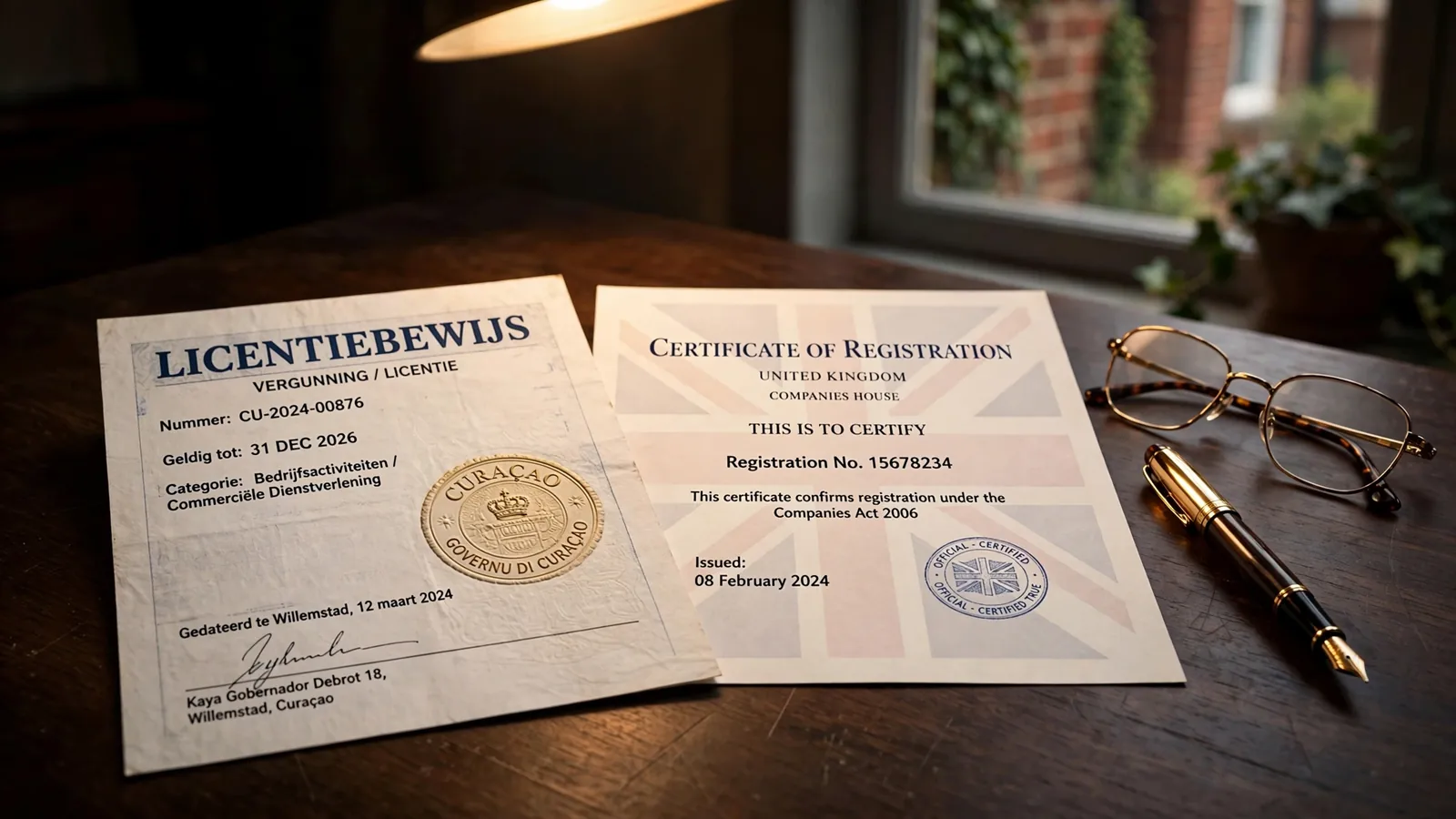
When a site says it has a Curacao casino licence, I would treat that as a claim to verify, not a conclusion. A badge in a footer can look official and still leave basic questions unanswered: which company is named, which regulator issued the permission, and does the information actually match the casino you are using?
Start with the operator’s own licensing details. Look for the legal company name and the regulator it says oversees it, then compare those details with information published by that regulator. A mismatch, vague wording or a logo without identifying details is a reason to pause. Don’t assume that a licence held by a related company covers the operator in front of you. And don’t rely on a third-party directory as proof.
That is a process, not a shortcut. A licence check can establish whether a claim appears to match public information; it cannot, by itself, tell you how a casino handles every dispute or protects every balance. I have learned not to let a polished badge do the thinking for me.
Anjouan is a comparison, not Curacao evidence
There is a useful distinction when comparing frameworks. Anjouan’s rules do not require casinos to have RNG testing, audits or segregated player funds. That tells you something specific about the requirements in that jurisdiction. It does not tell you what Curacao requires, and it does not verify any Curacao casino or licence.
Anjouan’s rules, such as not requiring RNG testing or audited player funds, are specific to its own jurisdiction and do not verify the requirements or status of a Curacao licence.
So, when you check a Curacao casino licence, keep the two jurisdictions separate. An Anjouan rule cannot fill a gap in what you know about Curacao, and a general label such as “licensed” cannot establish which rules apply. The regulator and company details need to match the claim being made.
If you cannot establish that match from the relevant regulator’s information, don’t treat the licence as confirmed. I would rather leave a question unanswered than turn a plausible-looking badge into proof. The small detail matters.
Bonuses, Deposits and the Catch in the Small Print
A welcome offer can make a balance look larger than the money you put in. I’ve learned not to treat that headline figure as cash I can withdraw. The useful details are in the terms: what counts towards wagering, which games qualify, when the offer expires and whether winnings are capped.
A specialist review has reported offshore welcome bonuses with wagering requirements of 35x or more. That is not a rule for every offer, and the multiplier alone does not tell you the full cost. Check whether wagering applies to the bonus, your deposit or both, and whether playing slots contributes in the same way as other games. “Free” can still come with strings.
The same goes for no-deposit offers and free spins. A specialist review has described free-spin packages that expire within 24–72 hours; the deadline and conditions can vary, so read the offer itself before opting in. Check whether any winnings from spins must be wagered before withdrawal, and whether the bonus can be declined. If the terms are hard to find, that is reason enough to pause.
Payment options may include credit cards, e-wallets, bank transfers and cryptocurrency, sometimes handled through alternative processors. Some non-UK-regulated casinos also accept crypto, which can bypass the UK restriction on credit-card-funded gambling. But a deposit route does not guarantee that the same route will be available for a withdrawal. Confirm the cash-out method, any conversion or processing costs, and what identity checks may be required before sending money.
I would also keep the payment record and a copy of the offer terms as they appeared when I accepted them. Bonus wording can change, and a welcome banner is not a substitute for the conditions attached to it. If you cannot tell what you must wager or how you can withdraw, skip the offer. No bonus is worth guessing.
A Gaming Licence Doesn’t Settle a Dispute
A licence can tell you which regulator’s rules an operator claims to follow. It does not automatically mean that regulator will take up your individual complaint. I used to read “licensed” as shorthand for “someone independent will sort it out”. That was too generous.
Anjouan is a useful example of why the distinction matters, but its rules should not be confused with those for a Curacao gaming licence. Under Anjouan’s framework, the authority does not handle, mediate or decide player complaints. The operator, rather than the regulator, must respond to a complaint within 30 calendar days.
That response requirement is not the same as an independent decision in your favour. It tells you the operator has to reply; it does not mean the authority will investigate the dispute or order a particular outcome. If you are challenging a refused withdrawal or a disputed account decision, those are very different things.
So before depositing, look for the complaints process in the operator’s terms: where to send a complaint, what information it asks you to provide, and what happens if you remain unhappy with the reply. Keep copies of messages and records of the transaction. Not glamorous, but useful if the story changes later.
And don’t transfer Anjouan’s rules to a Curacao casino. A Curacao gambling licence is governed by a different jurisdiction, so Anjouan’s complaint arrangements do not establish what a Curacao regulator or operator will do. Check the named regulator and the casino’s own complaint procedure rather than assuming that a licence label gives you a route to independent redress.
The awkward bit is that “licensed” can sound like a safety net when it may only identify the framework an operator says it follows. Read the complaint terms before you need them. That’s the less exciting check.
Are gaming sites not on GamStop permitted for UK players?
You do not commit a criminal offence under UK law by gambling on an unlicensed site. However, a casino serving customers in Great Britain must have a UK Gambling Commission licence, and sites outside GamStop are not part of the UK self-exclusion scheme.
Can UK players legally play at casinos licensed in Anjouan?
You do not commit a criminal offence under UK law by playing there. But an Anjouan licence does not authorise a casino to operate in the UK; operators serving Great Britain need a UK Gambling Commission licence.
Can I complain to the Anjouan regulator if a casino won’t pay me?
No. The Anjouan authority does not handle or decide player complaints, and Anjouan-licensed casinos do not have to offer an independent dispute-resolution route comparable to UK-approved ADR.
What happens if I have a dispute with an Anjouan-licensed casino as a UK player?
You can complain to the operator, which must respond within 30 calendar days under Anjouan’s framework. The Anjouan authority does not mediate or decide the dispute, and there is no comparable independent ADR route required.
Are sites that are not on GamStop legal for players in the UK to access?
UK law does not explicitly prohibit you from using gambling services licensed in another country, and players do not commit a criminal offence by gambling on an unlicensed site. However, operators serving customers in Great Britain need a UK Gambling Commission licence; sites not on GamStop are outside that self-exclusion scheme.
Is it legal for a UK player to gamble at an Anjouan-licensed casino?
You do not commit a criminal offence under UK law by gambling there. An Anjouan licence does not authorise the casino to operate in the UK, where operators serving Great Britain need a UK Gambling Commission licence.
Created by the "Casino not on Gamstop" editorial team.