Casino Dice Games in the UK: Odds and Formats
 Available in GB
A practical look at casino dice formats, the house advantage, bonus conditions and the difference between game mechanics and payment options.

- Why the House Has the Long-Term Edge
- What Changes When You Play Dice Games Online
- Casino Game Formats: Machines, Tables and More
- Best casino sites in the UK
- UK and Offshore Casino Sites: Know Which Side You’re On
- Dice-Roll Slots: Check the Spin Rules Before You Play
- Bonus Terms That Matter More Than the Headline
- Craps and Crypto: Separate the Game from the Payment Method
- What “Casino Dice” Can—and Can’t—Tell You
- Bitcoin Dice Casinos: Check the Payment Options, Not the Hype
- Free Dice-Themed Slots and the Catch in “Free”
Why the House Has the Long-Term Edge
A good run can make a casino game feel like it has turned in your favour. You might finish a session ahead, or see a few wins arrive close together and start to feel that you have found a pattern. I know how persuasive that can be. The hard part is separating what happened during one stretch of play from the way the game is set up over time.
Casino games offer the possibility of short-term gains, but typically give the house a predictable long-term advantage. Both parts matter. A player can win; the casino’s advantage does not mean every individual wager goes its way. It means that, across repeated play, the underlying terms tend to favour the casino. One lucky result can change your balance quickly. It does not, by itself, change that underlying balance of advantage.
That distinction is easy to lose when you are concentrating on the latest result. If you have just won, it can feel as if you are reading the game well. If you have lost, it can feel as though the next result ought to correct things. Neither feeling is evidence about what comes next. Random outcomes can cluster in ways that look meaningful while still offering no reliable promise about the next result.
I used to give a short winning spell too much credit. I would tell myself I had spotted something, when really I had only seen a run of results that happened to go my way. A loss could bring the opposite mistake: treating it as a reason to keep going until I was “due” a win. That story is comforting, but it can turn a decision to stop into a decision to chase. Not a clever system.
The phrase “house edge” can sound abstract, so I think of it as the quiet tilt built into the game rather than a forecast for my next turn. It is not a promise that the house wins every time, or that a player cannot leave ahead. It is a way to describe why a game can produce individual winners while still being favourable to the casino over sustained play. The short view and the long view are not contradictions; they are different windows onto the same arrangement.
Chicken Road Game Casino UK: What to Check
This is especially worth remembering when you are looking at dice games. The sight of dice can make an outcome feel simple: roll, result, win or lose. But simplicity of appearance is not proof that the chances are even, nor does a familiar format tell you who benefits over time. A roll can surprise you in either direction. The fact that one outcome has just appeared does not make a different outcome inevitable on the next roll.
That is why I try not to judge a game by a single result, or even by one session. A session is a small slice of play, and a small slice can be dominated by luck. A player may have a memorable win without having overcome the game’s long-term structure. Equally, a losing spell does not prove that a game has changed or that a recovery is waiting just around the corner. Results can be rough. They do not owe you a correction.
There is another trap in the way people talk about “winning strategies”. A routine may help someone stick to a personal limit or make decisions more consistently, but that is not the same as removing the casino’s advantage. Changing how you approach a game cannot turn an unfavourable long-term proposition into a favourable one simply because the sequence of bets feels disciplined. I have found that distinction more useful than searching for a clever-sounding method.
So when I think about whether a dice casino game is appealing, I separate the entertainment from the expectation. The entertainment is the uncertainty and the possibility that a result goes your way. The expectation is the less exciting part: casino games typically leave the house with the long-term edge. Keeping those ideas apart does not make a win less enjoyable. It just stops a win from becoming evidence that the next one is somehow more likely.
Attention: A winning streak is not evidence that the next result is more likely to be a win, nor does a loss mean a recovery is inevitable.
If you do play, it helps to decide what a session means to you before the results start tugging at your judgement. A win is still a win, and a loss is still a loss; neither needs a grand theory attached to it. I’ve learned to distrust the confident voice that appears after a lucky streak and the equally confident voice that appears after a bad one. Both can make randomness sound like a plan.
The basic trade-off is plain, even if it is easy to forget in the moment: casino games can pay players in the short term, while their typical long-term advantage belongs to the house. Keep that in view, and a run of good luck can be enjoyed for what it is, rather than mistaken for proof that the odds have changed.
What Changes When You Play Dice Games Online
Playing casino dice online removes the room around the game. There is no table edge to lean on, no sound of dice landing nearby and no croupier’s movements to follow. Instead, you use a screen: the game presents an outcome, records your choice or stake, and shows what happens next. That can make the experience feel quicker and more private, but it also means you are relying on a digital display rather than watching a physical game unfold.
The important part is what sits behind that display. Random-number games use numbers selected by a computer or other gaming equipment to produce outcomes. An animation may show dice tumbling across a screen, but the movement is a visual presentation; it is not the same thing as watching real dice bounce and settle in front of you. I used to treat the animation as if it offered clues. It didn’t. A convincing roll is still just the way the result is shown.
Mines Casino Game in the UK: How Play Works
That distinction matters if you are looking for an online dice casino and want to understand what you are actually playing. The screen can make an outcome feel more tangible than a number or symbol, but it does not turn a generated result into a physical throw. Once I stopped reading meaning into every little pause or flourish, the presentation became easier to take for what it is: a way to display the game.
The screen is the setting
In a physical casino, the setting itself gives you information. You can see the table, the people around it and the actions that lead to a result. Online, the interface has to provide that context. Buttons, labels and on-screen prompts show where to make a selection and when a round has finished. The exact layout can vary, so I would take a moment to read what is on the screen instead of assuming that a familiar-looking design works the way I expect.
That sounds basic. It is easy to miss.
Online play also shifts your attention. At a physical table, other people and the pace of the room can affect how long you stay. At home, the next round may be only a tap away. I have found that this can make time feel less noticeable. Taking a pause between rounds gives you a chance to check what you have done rather than letting the interface set the pace for you.
Do
- Take a pause between rounds
- Check your actions if the screen stalls
- Read on-screen instructions carefully
Don’t
- Let the interface set your pace
- Assume familiar designs work the same way
- Repeat taps during moments of uncertainty
A stable connection matters in a practical sense: you need to be able to see the game and interact with it. If a screen stalls or you are unsure whether an action has registered, stop and check the information the game provides before trying again. Repeating a tap in a moment of uncertainty is not a strategy; it is a good way to lose track of what you meant to do.
What “online” does not tell you
The phrase “dice casino online” describes where the game is played, not exactly how its outcome is produced or presented. A digital game may show dice on screen, while its result comes from a random-number process using computer-generated selections. The visual style alone does not tell you how a particular game works. Read its instructions before playing, especially if the controls or displayed result are unfamiliar.
This is also why an online casino dice game should not automatically be treated as equivalent to a game played with physical dice. They may look similar, but the way the result is delivered can differ. If you expected to watch a live throw, a computer-generated display may feel rather different. If what matters to you is being able to play through a screen, that distinction may matter less—but it is still worth knowing what the game is showing.
Casino games are available online where the law permits. That does not mean every digital game has the same design, or that the words “dice” and “casino” guarantee a particular experience. I try to separate the appearance from the mechanism: first understand what kind of result is being presented, then decide whether the format suits you.
JetX Casino Game UK: What the Slot Label Means
There is no special insight in watching an animated die spin longer, either. The animation can add atmosphere, but it is not a reliable signal about what result is coming. I learned that the unglamorous way: by giving little screen details more importance than they deserved. The result is the result.
For anyone considering playing casino dice online, the useful adjustment is simple. Treat the screen as the interface, not as evidence that you are watching a physical event. Take a moment to understand the instructions, pay attention to whether your input has registered, and keep your own pace rather than following the game’s prompts. Online delivery changes the feel and convenience of play. It does not make the display a source of clues.
Casino Game Formats: Machines, Tables and More
The first useful distinction is not the theme on the screen or the equipment on the table. It is how the game is organised: are you playing on your own, or taking part in a game run by a dealer? That gives you a clearer way to sort casino games than a flashy title ever will.
Machines: a solo format
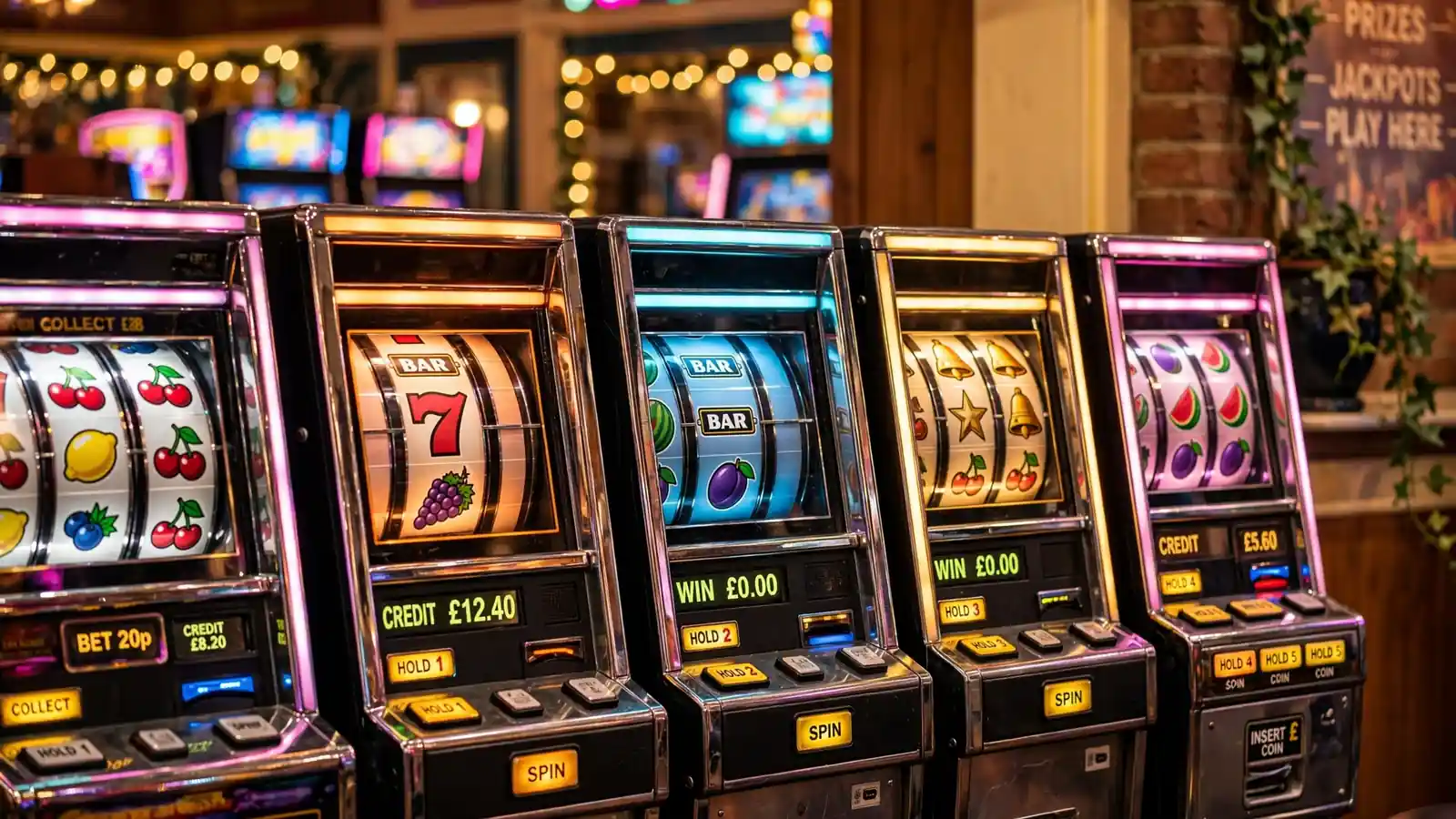
A gambling machine is generally designed for one player at a time. You use it without needing a casino employee to run the game, so the experience is largely between you and the machine. In an online casino, the same broad idea can appear on a screen: you take part individually, rather than joining a table with a croupier.
A gambling machine is designed for a single player to use without the involvement of a casino employee or croupier.
That distinction is useful when you are trying to understand where a game sits, but it does not tell you everything about its rules. A machine format is a way of delivering play, not a promise that every title works alike. The details still depend on the game itself.
I used to treat the picture and theme as the important part. That was a poor shortcut. The format tells you more about what taking part looks like; it does not, by itself, explain what can happen in a round.
Tables: a dealer and the casino
Table games work differently. Players compete against the casino, rather than against one another, and a croupier or dealer is usually involved in conducting the game. In a physical casino, that person is part of the table setup. Online, the word “table” can describe a game format without meaning that you are sitting in a room with other players.
A casino table game is not automatically a contest between everyone gathered around it. The other people may be taking part in the same game, but the central opposition is the casino. That is an easy detail to miss if you picture a table as a group of players trying to beat one another.
The dealer’s role also helps separate the format from a machine. A table game has a person conducting it, while a machine is usually played by one person without casino staff involvement. Simple distinction. Worth keeping.
Crash casino games in the UK: how they fit
Where dice fit
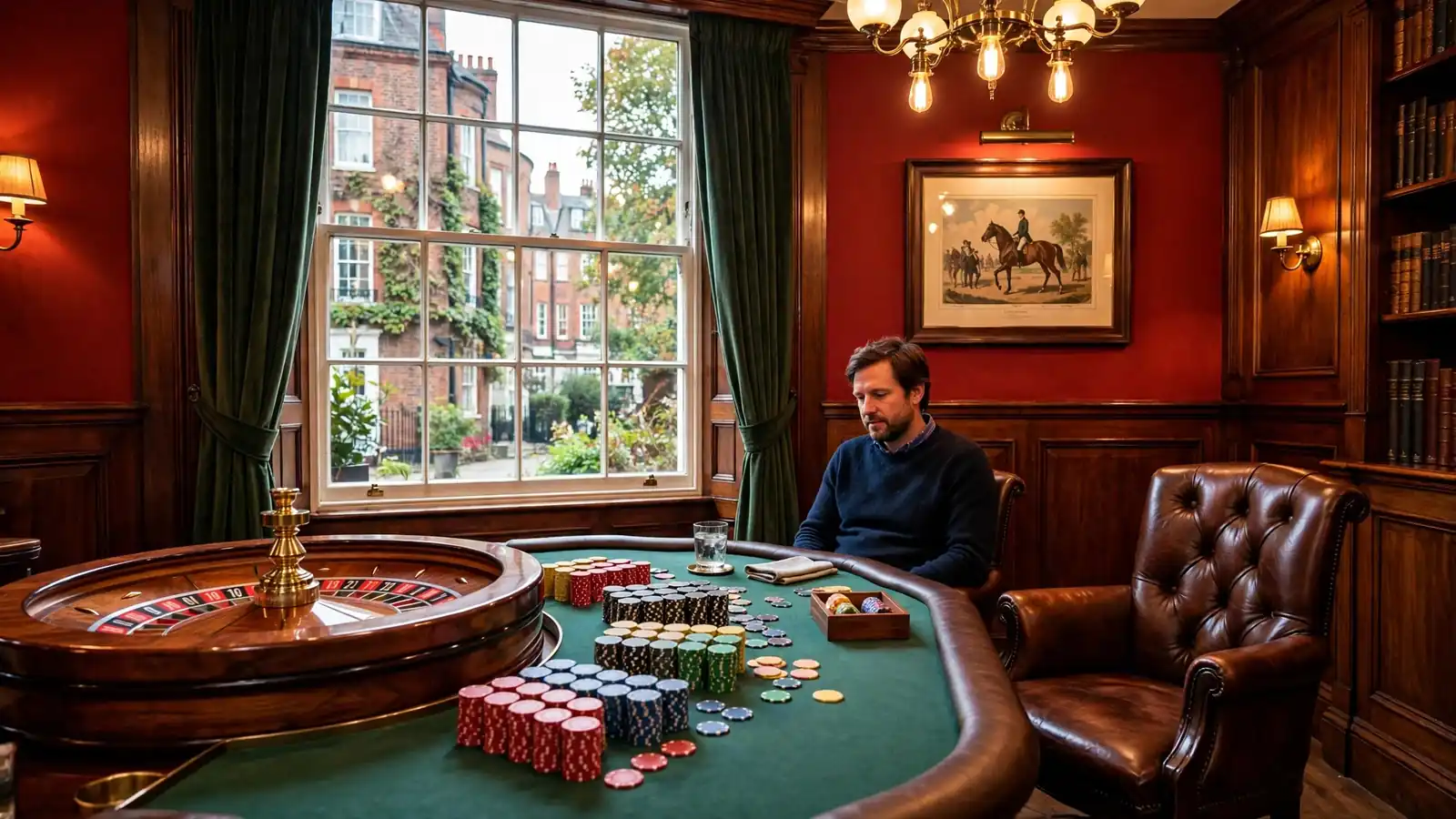
When you look for casino games involving dice, start by asking what format the game uses. A dice-based game could be presented as a table game or through a machine-style interface; the presence of dice in the theme does not settle that question. Nor does the word “table” in a title prove that a live dealer is involved.
That matters because searches for dice games at a casino can point towards very different experiences. One may be organised around a dealer-led table; another may be played individually. Those are broad categories, not claims about which particular titles are available at any given casino.
I would not use the artwork as a rulebook. Dice on a screen may be part of the presentation, while the format determines how you take part. Before you commit, look at the game’s own explanation and check whether it describes a machine or a table setup. A familiar-looking image is not enough.
A third kind of setup
Not every casino game fits neatly into “machine” or “table”. Poker is a useful contrast: players compete against one another, rather than against the house. In that kind of game, the casino commonly earns money through a commission known as a rake.
That is a different arrangement from a dealer-led table game where the casino is the opponent. It also shows why “table game” and “players compete against each other” are not interchangeable descriptions. The setting can look similar while the relationship between players and casino is different.
Machine Format
An individual experience where you play on your own without casino staff involvement.
Table Format
Games conducted by a dealer or croupier where players typically compete against the house.
Peer-to-Peer
Arrangements like poker where players compete against each other and the casino takes a rake.
If you are comparing casino games with dice, the practical checklist is modest: who are you playing against, is a dealer or croupier involved, and are you using a machine-style format or a table? Those questions make the category clearer without assuming that every dice game follows the same structure. Judge the format first. Then read the rules.
Best casino sites in the UK
- x3betBonus: Welcome Pack 100% Up to £1.000 + 200 Free Spins · Payout speed: 1-3 business days
- BeOnBetBonus: 100% up to €500 + 100 FS · Payout speed: 1-3 business days
- NightWinBonus: £900 + 400 free spins · Payout speed: 1-3 business days
- DieselwinBonus: Welcome Pack 250% up to £4000 + 200 FS · Payout speed: 1-3 business days
- SpinFormulaBonus: 550% Up To £15,000 + 550 FS · Payout speed: 1-3 business days
- AmunbetBonus: Join now and get 450% up to 2,700 GBP + 450 FS · Payout speed: 1-3 business days
UK and Offshore Casino Sites: Know Which Side You’re On
When I look at a dice casino site, I try to separate its games from its legal status. A page can look polished, list familiar payment methods and welcome UK players; none of that tells you whether the operator is licensed to serve people here. The distinction matters more than the wording around the games.
A specialist review has described the UK online casino market in 2026 as having two parallel sides: UKGC-regulated operators and offshore platforms outside that system. That is a useful way to understand the landscape, but it should not blur the legal line. Offshore casinos may accept UK players while operating without a UKGC licence. Being accessible is not the same as being authorised.
For real-money gambling in England, Scotland and Wales, operators need a licence from the UK Gambling Commission, or UKGC. The Gambling (Licensing and Advertising) Act 2014 established the licensing requirement for operators taking bets from British residents, including businesses based elsewhere. In short, an overseas address does not exempt a company that is selling gambling to people in Great Britain.
Aviator Casino Game UK: How It Works
That is why I would not use “non GamStop” as a synonym for “trusted”. It describes a site outside the UKGC system; it does not certify the operator or tell you that it meets UK licensing rules. Nor does a page advertising UK casino sites with dice games become a UK-licensed service just because it is written for British readers. Check what the operator actually says about its licence, and whether that licence is from the UKGC.
The same caution applies when a site promotes dice slots or a casino game with dice. Those descriptions tell you what kind of entertainment is being marketed, not who regulates the company taking your money. A search result or a prominent UK-facing offer is not proof of authorisation. I learned to look past the shiny front page.
There is also a practical difference between a UKGC-licensed casino and an offshore platform that accepts British customers. The former is operating within the UK’s licensing framework; the latter is not under UKGC oversight. So if you are comparing dice casino sites, start with the operator’s status rather than the game menu. “UK-friendly” is marketing language, not a licence category.
I used to treat a UK flag, sterling prices or a familiar-looking checkout as reassuring signs. They are not enough on their own. The key question is whether the operator holds the relevant UKGC licence for offering real-money gambling to customers in Great Britain. A company’s location may be abroad, but that does not remove the licensing requirement when it takes bets from British residents.
Licensing Warning
Operating without a UKGC licence is not the same as being authorised; offshore sites may accept UK players while remaining outside the legal regulatory system.
Keep the categories straight. A dice slots casino may be easy to reach from the UK and still sit outside the UKGC system; a UK-facing site is not automatically a licensed UK casino. If you want a trusted dice casino, the word “trusted” needs evidence, and the first thing I would verify is the licence. Less guesswork.
Dice-Roll Slots: Check the Spin Rules Before You Play
A slot with dice on the screen can look like a dice game, but the pictures do not make it a traditional game played by rolling dice. You are still using a slot: the result comes from the game’s spin, not from handling dice or making a craps-style bet. I’ve found that distinction useful, because a familiar theme can make a game feel simpler than its actual rules.
Before playing a dice-themed slot for money, check the stake shown for each spin and make sure you understand how the game pays. The UK rules for online slots set a maximum stake per spin according to age: players aged 25 and over can stake up to £5, while those aged 18 to 24 can stake up to £2. These limits apply to licensed UK play. The age bracket matters, so don’t assume a stake permitted for one group is permitted for everyone.
That’s the part worth checking first. A game’s artwork, title or animated dice may draw your eye, but none of that tells you what a spin costs or how its features work. I used to skim past the rules and go straight to the button. Not clever.
Live Dream Catcher Casino UK: What to Check
If you want to get a feel for a dice-themed slot without staking money, a demo or free-play mode can help you inspect the controls and see how the game behaves. Treat it as a way to learn the interface, not as proof that real-money play will feel the same: there is no real stake at risk in a demo, and it cannot show you what it feels like to lose money. Read the paytable and the game information before switching to cash play.
The phrase “roll the dice” can also blur two different ideas. On a slot, it may describe the theme or an on-screen feature. It does not by itself explain the rules of casino dice or craps, and it is not a substitute for reading the slot’s own instructions. If what you want is a game where dice are the central play, a slot may not be what you mean.
I’d check three things before starting: the stake per spin, the instructions for any special feature, and whether you are in demo or real-money mode. That quick pause is less exciting than tapping spin, but it can stop a themed slot being mistaken for something it isn’t. A dice design is decoration until the rules say otherwise.
Bonus Terms That Matter More Than the Headline
I used to look at the size of a welcome offer and assume the bigger figure meant better value. It doesn’t tell you what you’ll need to do before any bonus-related winnings can be withdrawn. The wagering requirement, the deposit needed to qualify and the rules for each part of the offer matter more.
Bonus Calculation
Identify the Requirement
Find the wagering requirement, such as 35x for a £100 bonus.
Calculate Total Turnover
Multiply the bonus by the requirement (£100 × 35) to find the total bets needed (£3,500).
Verify Terms
Check if the requirement applies to the bonus, the deposit, or both before playing.
A promotion’s headline can hide the calculation. If you receive £100 in bonus funds with a 35x wagering requirement, you must place £3,500 in total bets before cashing out. That is turnover, not a target profit: you can make the required bets and still lose the balance along the way. I learned to check whether the requirement applies to the bonus, the deposit, or both. Those are very different terms.
There is also a regulatory ceiling to factor in. Current regulatory guidance, effective from 19 January 2026, limits wagering attached to gambling incentives to 10x the bonus funds. So if a dice casino bonus advertises a large reward, read the detail rather than assuming the headline tells you how much play is required. A smaller offer with clearer terms may be easier to assess.
Check what activity counts, too. The rules prohibit one incentive from making you gamble across different product types, such as casino games and betting, to unlock the reward. In practice, the offer should not make a casino bonus conditional on placing bets in another gambling category. If the wording seems to bundle products together, pause and read it carefully.
Deposit thresholds can trip you up before wagering even begins. A specialist casino review notes that welcome-package stages may each have their own minimum deposit condition. That means qualifying for one stage does not necessarily qualify you for the next; check the requirement attached to each part before depositing. “Up to” is not the same as guaranteed, and a displayed bonus may depend on meeting that stage’s terms.
Crazy Time Live Casino Game Show in the UK
I now scan the conditions in this order: what deposit qualifies, how wagering is calculated, which games count, and whether there is a cash-out restriction. Then I compare that with the headline. Not glamorous. Useful.
A bonus is not extra cash sitting in your account without strings. It is an offer with conditions, and the conditions decide whether it suits the way you actually play. If you cannot work out the wagering total or the qualifying deposit from the terms, I would leave it alone. The headline can wait. The small print decides.
Craps and Crypto: Separate the Game from the Payment Method
When you see craps mentioned alongside crypto, keep two questions separate: what game is being offered, and how the account can be funded. A payment option does not tell you whether a platform actually has a craps table, what its rules are, or whether the game is fair. I have learned not to treat a familiar label as proof of what is behind it.
Craps is a casino dice game, but a search result using “crypto” and “dice” may be talking about payments, a dice-themed product, or a different game altogether. Those are not interchangeable. Check the game’s own description and rules before depositing; don’t assume that a site with cryptocurrency in its cashier offers casino craps.
Some alternative platforms may operate under licences from Curaçao, Malta or Gibraltar. That is not the same as a UKGC licence. In Great Britain, an operator taking bets from local customers must hold the relevant UKGC licence, wherever it is based. A crypto option does not change that. Non GamStop is a label you may encounter for sites outside the UKGC system, not a mark of UK regulation.
Some alternative platforms accept Bitcoin, Ethereum, and Litecoin alongside conventional cards and e-wallets.
A specialist review has reported that some alternative platforms accept Bitcoin, Ethereum and Litecoin alongside conventional cards and e-wallets. Treat that as a description of platforms covered by that review, not a promise about every casino or a feature that will stay available. Payment menus change. Check the cashier and the terms on the specific site, and make sure you understand which currency your balance is held in before sending funds.
That distinction matters with a crypto dice casino as much as with any other gambling site: payment convenience is not evidence of safer play, better odds or a verified craps game. I once let a slick-looking cashier do too much of the convincing. Wrong test.
If you are comparing a casino dice game with crypto payments, look at the game rules and the operator’s status independently. In the UK, online gambling is legal only through licensed and regulated sites, and players must be 18+. A platform accepting a digital currency does not bypass those requirements. Keep the game, the payment method and the licence in separate boxes; otherwise a polished crypto pitch can make an unverified offer look more solid than it is.
What “Casino Dice” Can—and Can’t—Tell You
“Casino dice” sounds like a clear category, but the phrase alone tells you less than it seems to. It points towards gambling on random outcomes, yet it does not explain what you are being asked to stake money on or how a result is decided.
Online Bingo UK: Rooms, Slots and Real-Money Play
At the broadest level, casino games involve putting cash or chips at risk on a possible outcome, or on a combination of outcomes. That is the useful starting point. The label does not fill in the rest: it cannot tell you which outcomes count, what a winning result looks like, or how a particular game handles a stake.
I used to skim past that distinction. A familiar word made a game feel easier to understand than it was. It isn’t.
Before treating something as a dice game, look for the rules attached to that specific game. Read what the available outcomes are, what your stake applies to, and what determines whether it wins or loses. If those details are not clear, the name is not a substitute for them. Nor does a dice-related label tell you whether the activity is a traditional game, a themed presentation, or something else; the rules have to do that work.
The same goes for broad phrases such as “dice casino” or “casino dice game”. They describe a general interest, not a complete set of instructions. Two games sharing similar wording need not give you the same choices or define outcomes in the same way. I would not assume otherwise from a title or a short promotional description.
That leaves a simple way to read the phrase: it signals the general idea of staking money on chance, but not the mechanics. Keep those separate. First understand what is at stake and what result matters; only then can you decide whether you understand the game well enough to play. No guesswork.
Verify Dice Game Rules
- Identify what specific outcomes count as a win
- Determine how the stake is applied to the result
- Confirm if the game is a traditional dice game or a themed presentation
- Read the full set of instructions attached to the specific title
Bitcoin Dice Casinos: Check the Payment Options, Not the Hype
Seeing Bitcoin mentioned beside dice games tells you something about payment, not what you can actually play. A specialist review describes some alternative platforms as accepting Bitcoin, Ethereum and Litecoin alongside conventional cards and e-wallets. Treat that as a report about those platforms, not a promise that every site accepts the same currencies or that a particular dice game is available.
That distinction matters if you are looking for Sic Bo or another dice game. A payment page cannot confirm the game catalogue, and a Bitcoin option says nothing by itself about how a game works or whether its outcomes are fair. I have learnt not to let a shiny payment logo do the checking for me. Separate claims. Then verify each one.
There is also a UK-specific point that can get lost in the word “casino”. Operators taking real-money bets from people in Great Britain need the relevant UKGC licence. Non GamStop sites sit outside that UKGC system; a cryptocurrency option does not change their regulatory status. Online gambling in the UK is legal only at licensed, regulated sites. Keep that in mind before treating a platform that accepts UK players as a UK-licensed casino.
If you are comparing payment methods, read the cashier information rather than relying on a banner. Check whether Bitcoin is listed for both deposits and withdrawals, whether the platform sets conditions around using it, and whether the other listed methods are actually suitable for you. Conventional card acceptance should not be read as permission to gamble with a credit card: UK-licensed operators cannot accept credit-card payments for gambling.
A “dice casino bonus” is another separate claim. A bonus may have its own eligibility and wagering terms; the fact that a site accepts Bitcoin does not tell you what those are. Read the offer itself before depositing, and do not assume a crypto payment qualifies.
American Roulette Casinos Online in the UK
Payment is only one checkbox. Not proof of quality.
Free Dice-Themed Slots and the Catch in “Free”
A dice-themed slot can look like a simple way to get the feel of rolling without joining a table game. But when the offer attached to it promises free spins, the word “free” describes the spins—not necessarily what you can withdraw if they land well.
I used to read the headline and treat the extra spins as a small win already in my pocket. That was backwards. A specialist casino review reports that some casinos cap winnings from free spins. In practice, a cap sets the maximum amount you can keep from those spins, even if they produce a larger balance. The cap may be in the promotion’s terms rather than beside the headline.
So, before accepting free spins on a slot built around dice or a roll-of-the-dice theme, look for the rules on winnings. Check whether the cap applies to the total winnings from the spins, and whether those winnings are credited as cash or bonus funds. The wording matters: a balance displayed in your account is not automatically money you can withdraw.
Then read the offer as a whole. The terms should make clear what triggers the spins and what conditions apply to any winnings. If the promotion page is vague, or the key restriction is hard to find, I would not count the headline value as a reliable guide to what you might receive.
This is where searches for free dice-themed slots can blur two different things. A slot may use dice as its visual theme, while free spins are a promotional feature attached to the game. Neither tells you that you are playing a traditional casino game where you throw dice. The label is not the rulebook.
I now check the cap first. Then I decide whether the spins are worth taking. “Free” is only the opening line.
Created by the "Casino not on Gamstop" editorial team.