Crazy Time Live Casino Game Show in the UK
 Available in GB
A practical look at Crazy Time’s live-show format, free-play claims and the checks that matter when choosing a UK casino.
- What Crazy Time Is—and What This Guide Can Verify
- Crazy Time Rules, Multipliers and Britain’s Slot Limits
- Trying Crazy Time Free: Demo Play and Free-Play Claims
- Crazy Time Casinos in the UK: Check the Licence Before You Deposit
- Best casino sites in the UK
- Playing Crazy Time Online: Live Casino Games and Providers
- Where to Play Crazy Time Without Trusting the Hype
- Choosing a Crazy Time Casino: Look Past the ‘Best’ Badge
- Crazy Time Strategy: Set Limits, Don’t Chase a System
- Crazy Time Bonuses and Deposits: Read the Conditions First
What Crazy Time Is—and What This Guide Can Verify
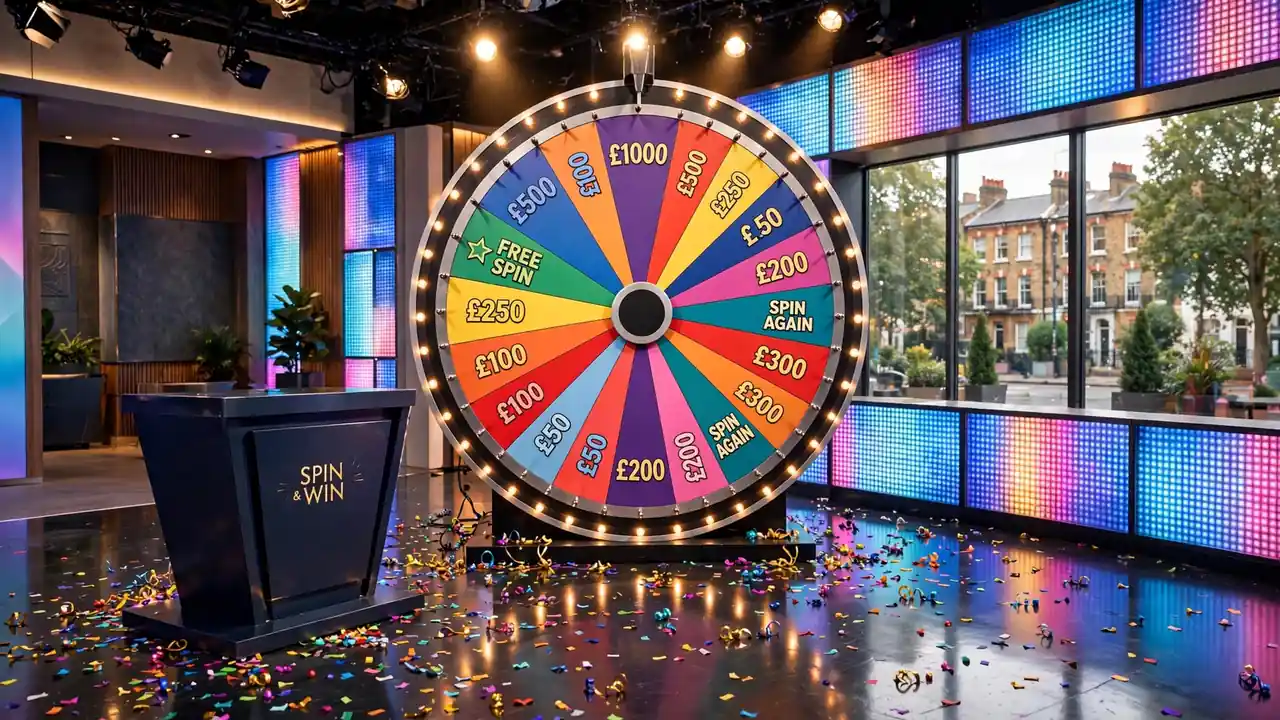
Crazy Time is a live casino game presented as a game show. It combines a studio-style presentation with casino wagering, which is why it can feel closer to watching a broadcast than opening a conventional table game. That show format is part of the appeal; it is not a promise that the experience is more predictable or more generous.
When I first came across games like this, I paid more attention to the bright set and the host than to what I was actually agreeing to wager on. Easy mistake. The useful starting point is to separate the presentation from the product: Crazy Time is a casino game, even when it looks like entertainment first.
The phrase “Crazy Time live casino” can mean a few different things in practice. Someone may be looking for the game itself, trying to understand what a casino means by live play, or checking whether a particular site carries it. Those are separate questions. A casino’s page or advert can show a familiar title without telling you everything about the operator, the account terms or the way the game is offered.
That is why I treat “featured” as a sales label, not a verdict. A game tile does not establish that a site is suitable for you, and a polished studio does not tell you whether you should deposit. I’ve been taken in by the feeling that a slick presentation must mean the details are sorted. It doesn’t. The details matter more than the lighting.
Folding all of that into one big “best Crazy Time casino” pitch would be convenient for an advert, not for you.
The UK context matters too. Gambling activity in the United Kingdom is regulated by the UK Gambling Commission, and remote gambling offered to consumers in Great Britain falls under its remit even when the operator’s key equipment is elsewhere. The Gambling Act 2005 covers England, Wales and Scotland, but not Northern Ireland. Those are useful boundaries when you see a page describing Crazy Time as available to UK players: the game’s name alone does not tell you what regulatory arrangements apply to the place offering it.
Deal or No Deal Casino UK: Slots and Free Play
I can describe the game’s broad live-show character and keep the surrounding claims in their proper lane. What I won’t do is turn a casino label into an endorsement or pretend the show format makes wagering risk-free. I’ve learned to pause before treating presentation as proof. Looks are not checks.
If you are curious about Crazy Time in Britain, start by recognising what you are looking at: a casino game wrapped in a live game-show presentation. Enjoy the spectacle if it appeals to you, but keep the spectacle separate from your judgement about playing. Only gamble what you can afford to lose.
Crazy Time Rules, Multipliers and Britain’s Slot Limits
Crazy Time combines a live wheel with bonus rounds, so its rules are not the same as a standard slot’s spin-and-payout format. You choose a segment before the wheel stops; the result determines whether your selection wins and whether a bonus feature is triggered. Multipliers and scores belong to that game’s own payout rules, not to Britain’s legal stake limits. Keep those two things separate.
When I first looked at a live game, I was tempted to treat the multiplier as the main story. It is only part of the picture: the selected segment and the game’s outcome matter too. A multiplier is not a promise of a return, and a displayed score does not turn a result into a prediction for the next round. No system changes that. Worth remembering.
A separate issue is the rules for online slots in Great Britain. A specialist review describing the limits says that a slot game cycle is capped at £5 for players aged 25 or over, and £2 for those aged 18 to 24. Those figures concern slot play, not a general ceiling for every casino game. The same kind of review distinguishes roulette and blackjack from slots: those table games are not covered by the slot stake limits.
Slot Stake Limits
A slot game cycle is capped at £5 for players aged 25 or over, and £2 for those aged 18 to 24 in Great Britain. These limits apply to slot play, not to general casino games like roulette or blackjack.
That difference matters when a live casino lobby puts wheel games, card tables and slots side by side. The setting may look similar, but the legal category is not interchangeable. Crazy Time’s wheel and bonus mechanics should not be confused with roulette rules merely because both involve a wheel, and the slot cap should not be applied to blackjack.
Before you play, read the game’s own rules for how selections, bonus rounds, multipliers and payouts work. Then treat any applicable slot limit as a separate legal restriction, rather than a feature of Crazy Time’s scoring. I’ve found that keeping the two questions apart makes the terms much easier to understand.
Trying Crazy Time Free: Demo Play and Free-Play Claims
A free version can sound like an easy way to try Crazy Time before risking money. The catch is that “free” can describe different things: a demo, a promotional offer, or simply a page using the word to attract attention. I’ve learned not to treat those as interchangeable.
A demo is a no-deposit way to see a game, if the operator actually provides one. You should be able to play without funding a gambling account or wagering your own money. It can help you get a feel for the screen and pace, but it is not the same as playing for cash. A demo result does not show what you will win, or whether you will win, when real money is involved.
That distinction matters with Crazy Time because a page labelled “free casino game” may not explain what happens after you click through. Check whether it opens a genuine practice mode, asks you to register, or takes you towards a deposit. If you cannot tell, pause rather than assuming the play is free. A button or banner is not proof.
What “free spins” might mean
People also look for Crazy Time free spins, including offers described as being for UK players. Read the wording carefully: a promotion may refer to another game, require a qualifying action, or carry conditions that affect whether winnings can be withdrawn. Those details belong in the offer’s terms, not in the headline.
Attention: A promotion labelled as "free" may require qualifying actions, apply to a different game, or carry conditions that affect whether you can withdraw winnings.
I would not count an offer as useful just because it says “free”. Find out which game it applies to, what you must do to claim it, and what restrictions apply to any winnings. If the terms are unclear or the offer seems to change between the headline and the detailed rules, leave it alone. No promotion is worth guessing over.
Free spins are not the same as a demo, either. A demo is for trying a game without wagering your own funds; a promotion is an offer with conditions. Don’t assume that a casino has either option simply because a review, advert, or search result mentions it. Check the operator’s own game page and offer terms before making a decision.
A practical way to assess a free-play claim
When I’m checking a claim, I look for plain answers to a few basic points:
- Does the game open in a clearly labelled demo or practice mode?
- Can you try it without making a deposit?
- Does the page explain whether registration is required?
- If it is an offer rather than a demo, are the eligibility rules and restrictions available before you accept?
If those answers are missing, the word “free” is doing more work than the information. A review can help you spot questions to ask, but a positive rating alone does not confirm that a particular mode or promotion is available now. Availability can vary, so verify it directly instead of relying on a copied description.
A demo can be a sensible way to decide whether you even like the format. It cannot make real-money play safe, predictable, or profitable. If you move from practice to gambling, treat that as a separate choice, not as the next automatic step. Only gamble what you can afford to lose. Stop if the experience stops feeling like entertainment.
Crazy Time Casinos in the UK: Check the Licence Before You Deposit
A casino name, a polished website and a page showing Crazy Time are not proof that the operator can legally take your money in Great Britain. I’ve learned to separate what a site says about itself from what can be checked independently. For a real-money account, the key check is whether the business holds the relevant operating licence from the UK Gambling Commission.
The Commission regulates commercial gambling in Great Britain, including remote gambling offered to people there. Its remit does not depend on where an operator keeps its servers or other key equipment. The Commission is the sole regulator for commercial gambling in Great Britain; a foreign company serving British customers still needs the appropriate British licence. A logo or a line in the footer is not a substitute for checking.
Crash casino games in the UK: how they fit
Check the operator, not just the brand
Start with the Gambling Commission’s public register at gamblingcommission.gov.uk. Search for the legal business named in the casino’s terms, not only the brand shown at the top of the page. A brand may be run by a company with a different name, so the important question is whether the operator behind the account appears with the relevant permission to provide remote gambling to Great Britain.
Then compare the register entry with the details on the casino site. Look for the operator’s legal name and licence information in its terms or other regulatory disclosures. Check that those details match the register and that the permission covers the service being offered. If a site displays a licence number, search that number in the register rather than treating it as self-authenticating. If the names do not line up, or you cannot establish which company would hold your account, pause before depositing.
The Commission issues operating licences to businesses and personal licences to individuals working in regulated roles. For you as a customer, the relevant point is the business’s operating permission: an employee’s personal licence does not authorise a casino brand to serve players on its own.
Checking a Licence
Search the register
Visit gamblingcommission.gov.uk and search for the legal business name found in the casino’s terms.
Verify the operator
Compare the register entry with the legal name and licence information provided on the casino site.
Match the permission
Ensure the licence number matches the register and that the permission specifically covers remote gambling in Great Britain.
Why the brand name can mislead
I once took a familiar-looking name as a shortcut. That was lazy checking. A brand can appear in adverts, reviews or search results without those appearances demonstrating that the company operating it holds a British licence. Likewise, a statement that a site is “licensed” needs context: who issued the licence, which legal entity holds it, and whether it covers customers in Great Britain?
A specialist review reports that its check of the public Gambling Commission register dated 26 September 2026 did not identify a LuckyPays entry under the brand or the stated domain, including luckypays.io. That is a dated register finding, not a substitute for your own check. Register details can change, and a brand-name search alone may not settle which company is behind a site. Search the current register yourself and compare the result with the operator’s legal details before you open or fund an account.
If the site points to a licence issued elsewhere, that does not answer the British licensing question. The relevant test is whether the operator holds the Gambling Commission permission required to offer remote gambling to Great Britain consumers. A foreign address or overseas equipment does not remove that requirement.
What a licensed account should let you check
Licensing matters beyond the label. Before you deposit, make sure the operator identifies the company responsible for your account and gives you a way to raise a complaint. UK-licensed casinos must provide an internal complaints process and access to an approved Alternative Dispute Resolution service if a dispute is not resolved through the operator’s process.
Casino Dice Games in the UK: Odds and Formats
A licensed operator must verify your age before allowing you to deposit. It must also prompt new customers to set a financial limit before their first deposit and make account-level limit controls accessible. Take a moment to find those controls rather than assuming they will be obvious later. UK-licensed casinos must provide responsible gambling tools, including self-exclusion.
There are also restrictions on how gambling accounts can be funded: UK-licensed casinos cannot accept credit cards for gambling, including credit-card funds routed through a money service business or through a wallet that permits such funds to be used. These protections are reasons to check the operator’s status, not a reason to skip the register check.
Online gambling is legal in the UK for adults aged eighteen and over when the operator holds a UK Gambling Commission licence. If you cannot match the casino’s operator to a current register entry, do not rely on reassuring wording or a game being available on the site. Check first. Then decide whether you want an account at all.
Best casino sites in the UK
- x3betBonus: Welcome Pack 100% Up to £1.000 + 200 Free Spins · Payout speed: 1-3 business days
- BeOnBetBonus: 100% up to €500 + 100 FS · Payout speed: 1-3 business days
- NightWinBonus: £900 + 400 free spins · Payout speed: 1-3 business days
- DieselwinBonus: Welcome Pack 250% up to £4000 + 200 FS · Payout speed: 1-3 business days
- SpinFormulaBonus: 550% Up To £15,000 + 550 FS · Payout speed: 1-3 business days
- AmunbetBonus: Join now and get 450% up to 2,700 GBP + 450 FS · Payout speed: 1-3 business days
Playing Crazy Time Online: Live Casino Games and Providers
When you open a live-casino lobby, you are not looking at a single game with a few variations. It is a broader part of an online casino, where table games and show-style titles sit alongside one another. Crazy Time belongs in that live-game context, but it is worth separating the game itself from the casino hosting the lobby and the provider behind a title. Those are different parts of the experience.
Live Dream Catcher Casino UK: What to Check
That distinction sounds obvious until you are comparing pages full of logos and promotional labels. I have caught myself treating a familiar game name as proof that I understood the rest of the offer. I didn’t. A game’s presence tells you what you may be able to play; it doesn’t, by itself, tell you what other live tables are available or how the casino’s wider service works.
What a live-casino lobby is showing you
A live-casino section groups games that are delivered in a live format with other casino products. Depending on the operator’s selection, that can mean traditional card and table games as well as titles built around a more theatrical presentation. The lobby is the doorway, not a guarantee of a particular range: one casino’s live selection need not match another’s.
That matters if you arrive looking specifically for Crazy Time. You might see the title among other live options, but the surrounding games can be useful context too. If you already know blackjack or roulette, their presence makes the live area easier to understand; if you do not, there is no need to pretend the whole lobby is one kind of game. A show-style title and a conventional table game can share a section without sharing the same format.
I also try not to read too much into the words “live casino”. They describe a category, not a quality rating. The label does not tell you whether a particular game is available to you at that moment, what the interface looks like, or whether the rest of the casino suits you. Check what is actually displayed rather than filling in the gaps from the branding.
Mines Casino Game in the UK: How Play Works
Grosvenor’s live-casino history
There is a useful piece of British context here. Grosvenor first introduced its live casino games in 2013. Its initial selection included card and casino games such as Blackjack, Texas Hold’em and Roulette. That is a concrete example of how a live-casino offering can be framed as a range rather than as a single headline game.
It also shows that live casino is not a synonym for one particular type of title. Blackjack, Texas Hold’em and Roulette have distinct ways of playing, even when they appear within the same wider live area. Crazy Time sits in that broader online environment, where operators may present different kinds of live games together. The common setting does not make the games interchangeable.
For me, this is a better way to approach an online casino with Crazy Time than to assume that the title tells the whole story. Look at the surrounding live selection and see whether it is actually relevant to you. A lobby crowded with unfamiliar names is not automatically better than a smaller range you can make sense of. More choice can just mean more scrolling.
Provider, operator and game
The provider creates or supplies a game; the operator runs the casino site and its account experience. Those roles can be easy to blur because the same game title may appear in different casino lobbies. I find it helps to ask two separate questions: what game am I looking at, and which casino am I using? One answer does not settle the other.
Do
- Separate the game provider from the casino operator
- Use category filters to find games in a broad lobby
- Check the operator’s own game listing for availability
Don’t
- Treat a game’s presence as proof of the wider service
- Assume all live lobbies have identical layouts
- Rely on promotional labels to understand the offer
A provider name can help identify who is behind a title, but it is not a substitute for looking at the game information or the casino’s own presentation. Likewise, seeing Crazy Time listed does not mean every feature, layout or neighbouring title will be identical wherever you encounter it. The practical details are on the page in front of you.
If you are browsing from a phone or a computer, the live-casino interface may be arranged differently, so the game list can take a little finding. I have wasted time searching a broad lobby when a category filter would have narrowed it down. Nothing dramatic. Just avoid assuming that a missing tile means the whole live section is empty; check the available categories and the operator’s own game listing.
The main point is simple: Crazy Time is one title within a wider live-casino setting. Grosvenor’s launch history gives a real example of that wider range, from Blackjack and Texas Hold’em to Roulette. Keep the game, provider and casino in separate boxes as you browse. It makes the lobby easier to read—and the advertising a little less persuasive.
Where to Play Crazy Time Without Trusting the Hype
Finding a place to play Crazy Time is less about spotting a flashy wheel graphic and more about working out who is actually taking your money. I used to treat a familiar-looking casino page as a decent sign. It isn’t. A brand name, polished live-game lobby or “play now” button does not establish that the operator can legally serve you in Great Britain.
Chicken Road Game Casino UK: What to Check
Start with the operator behind the site, then check its licence number on the UK Gambling Commission’s public register before depositing. The Commission regulates remote gambling offered to people in Great Britain, wherever the operator’s equipment is located. Make sure the register entry matches the business and the website you intend to use; don’t rely on a logo or a licence claim copied into a footer. If you cannot connect the site to a current entry, stop there.
That check is the gate, not the whole decision. A licensed casino can still be a poor fit for you. Open the account and payment information before you sign up, and see whether the operator explains its rules plainly. I’ve learned not to assume that a live casino page tells me anything about how account controls work. Different job.
Look at the account before the game
A UK-licensed operator must verify your age before allowing you to deposit. It must also prompt new customers to set a financial limit before their first deposit and make account-level limit controls accessible. Check that you can find those controls without digging through vague help pages. If setting a limit feels like a nuisance to the site, that tells you something about the experience you may have later.
Payment options matter too. UK-licensed casinos cannot accept credit cards for gambling, including credit-card funds routed through a money service business. A wallet that lets you use credit-card funds for gambling is not an acceptable workaround either. Read the payment wording closely rather than assuming every familiar payment button means the same thing.
Verify Your Account
- Confirm the operator is licensed by the UK Gambling Commission
- Locate the tools for setting financial limits
- Find the internal complaints process and ADR service
- Verify that credit cards are not being used for funding
- Identify the self-exclusion tools
I would also look for clear routes to raise a complaint and find the operator’s self-exclusion tools. UKGC licensees must provide an internal complaints process and access to an approved Alternative Dispute Resolution service, as well as responsible-gambling tools including self-exclusion. Those are practical parts of an account, not decorative links.
Don’t let the wheel do the choosing
Once the operator checks out, make sure the game is actually available to your account and that you understand the site’s own access conditions. A lobby image or a page mentioning Crazy Time does not prove you can launch it from your location or account. I’d rather confirm that directly than deposit on the strength of an advert.
Then pause before funding the account. You should be able to see how to set limits and where to get help before play starts, not only after a problem. Keep the choice of casino separate from the excitement of the Crazy Time wheel: a lively presentation does not make an operator trustworthy, and a trusted operator does not make gambling a way to earn.
If you decide to play, only gamble what you can afford to lose. That’s the check I wish I’d treated as seriously as the game screen.
Choosing a Crazy Time Casino: Look Past the ‘Best’ Badge
A “best” badge is a sales claim, not a reason to open an account. I’ve learned to treat casino rankings as a starting point for questions, not as proof that a site suits me. A page can look polished and still leave out the detail that matters once you register: the terms attached to an offer, the games it actually lets you access, or how to contact support when something goes wrong.
JetX Casino Game UK: What the Slot Label Means
Once you have checked that an operator is authorised to serve Great Britain, compare what it says with what you can verify on its own site. Make sure the Crazy Time listing is for the game you intend to play, rather than relying on a thumbnail or a ranking label. Read the account terms before signing up, especially any conditions that could affect withdrawals or restrict how an offer can be used. If wording is unclear, pause and ask the operator to explain it in writing. A glossy banner is not an answer.
Be wary of ratings and result claims
A review score can compress a lot of different things into one tidy number: usability, customer service, promotions and the reviewer’s own priorities. That may be useful, but it cannot tell you what your experience will be. Look for a clear explanation of how the reviewer reached its verdict, whether the page distinguishes advertising from editorial judgement, and whether important drawbacks are mentioned as plainly as the selling points.
The same caution applies to claims about Crazy Time results. A page displaying recent outcomes may describe what has already happened; it does not establish what will happen next. I used to read patterns into short runs of results and convince myself I had spotted a signal. I hadn’t. Past outcomes are not a dependable forecast, and no “best strategy” label turns them into one. Don’t let a results table or confident tip push you into wagering more than you planned.
Compare the experience, not the badge
Before choosing, check the practical details that shape your experience:
- Game access: Can you find the game in the operator’s own lobby, and are the instructions for accessing it clear?
- Account controls: Can you find the tools for setting and changing your financial limits without digging through vague help pages?
- Support and complaints: Is there a clear route to contact customer support and raise a complaint?
- Offer terms: Are the conditions available before you accept, and can you understand what you would need to do?
- Payment rules: Does the operator explain which payment methods it accepts for gambling?
These checks are more useful than a page promising the “best Crazy Time casino in the UK” without showing how it reached that conclusion. Even a well-presented comparison can become outdated, so confirm important details directly with the operator before you act.
I also try to separate a casino’s presentation from my own expectations. A busy lobby, a prominent promotion or a confident review does not make a session more predictable. If you decide to play, set your own boundaries before opening the game, rather than letting a site’s prompts set the pace. Only gamble what you can afford to lose. That part is yours to control.
Crazy Time Strategy: Set Limits, Don’t Chase a System
Searching for a Crazy Time strategy can make it sound as if there is a hidden sequence to learn: follow a tracker, spot a pattern, then wager at exactly the right moment. I understand the appeal. I used to look for a system whenever a run of results felt meaningful. But a record of what has already happened is not a reliable instruction for what to do next.
A tracker can organise past results. It cannot turn them into a guarantee, and a streak on a screen is not proof that the next outcome is “due”. Treat any chart or casino tracker as historical information, not a forecast. If someone presents it as a way to beat the game, I’d want to know what evidence supports that claim before trusting it with my money.
Make the limit before you start
The practical part of a live casino strategy is deciding your boundaries before the excitement takes over. Choose an amount you can afford to lose, and don’t add to it because a session is going badly or because you think a win is close. Only gamble what you can afford to lose.
I have made the familiar mistake of treating a limit as flexible once I was already playing. It wasn’t a strategy; it was just a decision I kept moving. A firmer approach is to decide in advance what ends the session, whether you are ahead or behind, and then stop when you reach that point. Keep the money for gambling separate from money needed for bills or other commitments.
Time matters too. A session can feel shorter than it is when you are focused on the screen. Set a stopping point before you begin, and take a break rather than letting one more round become the plan. If you find yourself repeatedly breaking your own boundaries, consider using account controls or self-exclusion instead of relying on willpower in the moment. Those tools are there for a reason.
Ignore “systems” that sell certainty
A betting system may tell you to increase or change your wager after a particular result. That can make your choices look methodical, but it does not remove the risk of losing money. Nor does a complicated table or tracker make a prediction sound merely because it has more detail.
I’d be wary of promises built around a “foolproof” method, a supposedly perfect casino history, or a tracker that claims to reveal what comes next. Ask what the tool actually records and what it can prove. If it only shows previous outcomes, it is a record—not a crystal ball. Don’t hand over personal or payment details to an unfamiliar tracking service just because its presentation looks polished.
There is no need to turn every session into an experiment. If you choose to play, decide on your limits, keep them, and accept that the outcome may be a loss. If the game stops being entertainment and starts feeling like a way to recover money, step away and seek support. Chasing a system can keep you playing; setting a boundary gives you a clear reason to stop.
Crazy Time Bonuses and Deposits: Read the Conditions First
A Crazy Time welcome bonus can look generous until you check what it actually asks you to do. I’ve learned to treat “free” as a label, not a description: an offer may have eligibility rules, restrictions on which games count, or conditions attached to withdrawing winnings. Read the terms before you opt in, and make sure you understand what happens if you do not meet them.
A no-deposit offer is not automatically cash you can withdraw. Check whether it is available to you, what play is required, which games are excluded, and whether any winnings are subject to further conditions. If those details are hard to find or unclear, I would not count the promotion as part of my budget.
For a deposit bonus, look at the full cost of qualifying, not just the headline amount. Check how the promotion applies to Crazy Time, whether you must opt in, and whether accepting it changes the withdrawal terms. A bonus is optional; declining one can be the simpler choice.
Before funding an account, check the payment rules. UK-licensed casinos cannot accept credit cards for gambling, including credit-card funds routed through a money service business. They also cannot accept wallet payments if the wallet lets you use credit-card funds to gamble. The operator must verify your age before allowing a deposit, and new customers must be prompted to set a financial limit before their first one. Account-level limit controls should remain accessible.
Check the operator’s withdrawal conditions as carefully as its deposit options. Read how it handles verification, payment-method restrictions and outstanding bonus terms; do not assume a displayed balance can be withdrawn without meeting the stated conditions. Keep the promotion’s terms for reference.
“Not on GamStop” is not a bonus feature. If you use self-exclusion, do not treat an offer from a site outside that scheme as a workaround; check the operator’s status and whether the account is suitable for you before sending money.
I now read the conditions before deciding whether an offer is worth the trouble. And I only gamble what I can afford to lose.
What are the online slot stake limits in Great Britain?
The limit is £5 per game cycle for players aged 25 and over, and £2 for players aged 18 to 24. These limits apply to slots, not roulette or blackjack.
Are online casino games licensed and regulated?
Yes. The UK Gambling Commission regulates online gambling in Great Britain, and operators serving consumers there must hold the relevant licence.
Is LuckyPays licensed by the UK Gambling Commission?
The Commission’s public register does not list LuckyPays or luckypays.io. Remote operators serving Great Britain consumers are required to hold the relevant licence.
Created by the "Casino not on Gamstop" editorial team.