Safer Gambling Help UK: Support, Exclusion and Payment Blocks
 Available in GB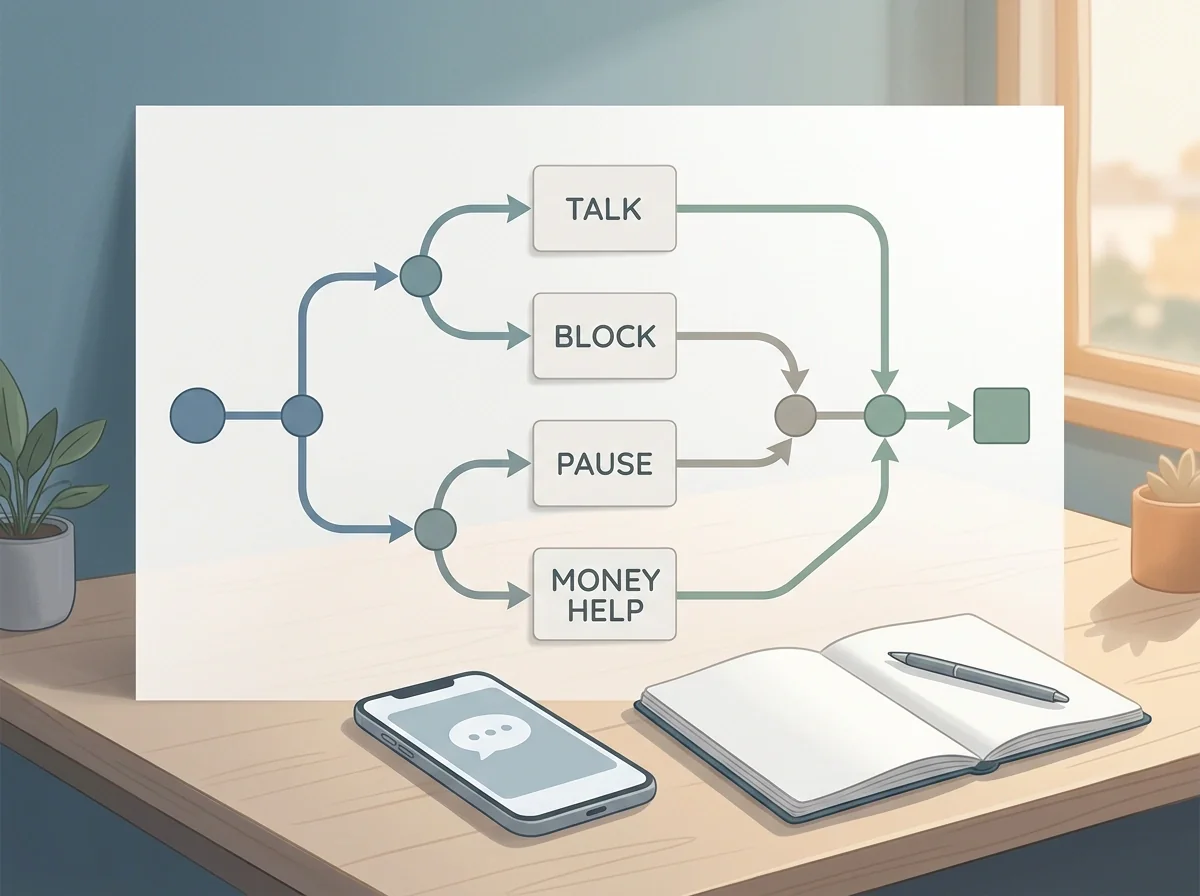
Safer Gambling Steps: Resolving the Problem in Front of You
Support works best when it is matched to the situation. A person who is trying to stop gambling right now needs a different first step from someone who is collecting documents for a withdrawal complaint. Someone worried about debt may need money guidance as well as gambling support. Someone who feels distressed may need immediate crisis support rather than another account check. The table below keeps those paths separate so one problem does not blur into another.
| What is happening | Useful first step | Why this helps |
|---|---|---|
| I need to stop gambling now, or I am about to deposit again. | Contact the National Gambling Helpline through GamCare on 0808 8020 133, or use the GamCare TalkBanStop route. | It moves the decision away from the gambling screen and into a conversation with a gambling support service. |
| I need to block gambling websites or accounts. | Use GAMSTOP for online multi-operator self-exclusion where it applies, and check TalkBanStop for combined support and blocking routes. | Self-exclusion and blocking tools create friction when the urge to gamble is strong. |
| I need to slow or block payments. | Check your bank’s current instructions for gambling-payment blocks and read the payment controls guide. | A bank block can interrupt deposits before money reaches a gambling account. |
| I am worried about debt, bills or money pressure. | Use the Gambling Commission’s organisations-that-can-help page to find current money and debt support links. | Debt pressure can keep gambling going, so money support may be needed alongside gambling support. |
| I feel at immediate risk or unable to stay safe. | Use the appropriate emergency or crisis route listed by official health and crisis services, rather than continuing to search gambling pages. | Immediate safety comes before account checks, complaints, balances or gambling decisions. |
Best casino sites in the UK
- x3betBonus: Welcome Pack 100% Up to £1.000 + 200 Free Spins · Payout speed: 1-3 business days
- BeOnBetBonus: 100% up to €500 + 100 FS · Payout speed: 1-3 business days
- NightWinBonus: £900 + 400 free spins · Payout speed: 1-3 business days
- DieselwinBonus: Welcome Pack 250% up to £4000 + 200 FS · Payout speed: 1-3 business days
- SpinFormulaBonus: 550% Up To £15,000 + 550 FS · Payout speed: 1-3 business days
- AmunbetBonus: Join now and get 450% up to 2,700 GBP + 450 FS · Payout speed: 1-3 business days
Verified support routes to know
| Service or official page | What it is for | How to use it safely |
|---|---|---|
| GamCare and the National Gambling Helpline | Gambling support. GamCare verifies the National Gambling Helpline number 0808 8020 133 and describes support as available 24/7 on its TalkBanStop page. | Use it when you are trying to stop, worried about spending, chasing losses, or unsure what protection to add next. |
| TalkBanStop | A GamCare route for combining a conversation with practical protection steps around gambling access. | Use it when one tool is not enough and you want support plus blocking or self-exclusion layers. |
| GAMSTOP | An online multi-operator self-exclusion scheme. Gambling Commission licensed online gambling businesses must participate. | Use it as a protective layer. Do not use this page to look for ways around self-exclusion. |
| Bank gambling-payment blocks | A payment-control option offered through banks, with general public guidance from the Gambling Commission. | Check your bank’s own current instructions because the exact steps and account coverage are bank-specific. |
| Gambling Commission organisations-that-can-help page | A public page listing organisations that can help with gambling harm, money, debt and crisis support. | Use it to find current official links rather than relying on old phone numbers or copied contact details. |
If you are self-excluded or trying to undo a protection
GAMSTOP is an online multi-operator self-exclusion scheme. Official guidance says Gambling Commission licensed online gambling businesses must participate, and users should not work around self-exclusion mechanisms. GAMSTOP registration options include six months, one year, five years, and five years with auto renewal. The self-exclusion cannot be deactivated until the minimum exclusion period has ended.
Those boundaries can feel frustrating when the urge to gamble is strong. The frustration does not mean the protection has failed. It means the protection is doing the job it was designed to do: create a barrier at a risky moment. A search for sites outside that barrier should be treated as a signal to pause, not as a sign that you need a different website.
If you have self-excluded through an operator, Gambling Commission guidance describes self-exclusion as a protective tool and says businesses must close accounts, return account money and remove the person from marketing databases after self-exclusion. If account money, documents or contact from a business is the issue, keep records and read the withdrawal and complaint evidence guide. If the issue is the urge to gamble despite exclusion, contact support first.
What to do in the next hour
- Move away from the gambling screen. Close the site, advert, account page or payment page. Do not keep it open while deciding.
- Contact a support route. Use GamCare and the National Gambling Helpline on 0808 8020 133, or the TalkBanStop route, if gambling feels hard to stop.
- Add a practical barrier. If you can, check GAMSTOP, bank gambling-payment blocks and account limits while you are not in the middle of a deposit decision.
- Reduce access to money for the moment. Do this safely and lawfully: step away from payment screens, stop moving funds, and avoid alternative routes that defeat a block or limit.
- Tell one trusted person if that is safe for you. A simple message can be enough: you are trying not to gamble and need help staying away from deposits tonight.
- Keep evidence if there is an account problem. Save screenshots and support messages, but do not use a dispute as a reason to keep playing.
- Use official help pages for debt or crisis pressure. If bills, debt or distress are driving the urge to gamble, use the current links from official help pages rather than searching for another gambling account.
Protective tools work better in layers
One tool rarely carries the whole load. GAMSTOP can reduce access to participating licensed online gambling businesses. Bank blocks can slow payment attempts. Financial limits and account history can make spending more visible. Support services can help you talk through the pressure behind the urge. Debt or money guidance can deal with problems that gambling may have made worse. Each layer answers a different part of the problem.
This is also why a missing tool is a warning sign on a gambling site. Licensed remote standards include facilities for financial limits and customer account information such as account history. If a site outside a familiar protection route also lacks clear limits, account history or support signposting, it is not offering a better experience. It is removing barriers that might protect you.
Do not judge a tool only by whether it stops every possible route. A bank block may not cover every payment method. A self-exclusion scheme may not cover every website in the world. A conversation may not remove the urge instantly. The point is to add friction, support and time, especially in the short window when a deposit feels urgent.
When the issue is money, complaints or documents
Some people arrive at a support page because they are angry or anxious about a balance, delayed withdrawal, identity request or closed account. Those problems can be real, and keeping evidence is useful. Save dates, screenshots, emails, chat transcripts, payment references and the terms you relied on. If the operator is licensed, complaint routes may exist, but the Gambling Commission is not an ombudsman and cannot recover money for an individual transaction.
Even where the account problem is genuine, it can still feed harmful gambling. A delayed withdrawal can become a reason to keep playing. A bonus dispute can become a reason to deposit again. A document request can keep you checking the account repeatedly. Separate the evidence task from the gambling task: collect what you need, then step away and use support if the situation is pulling you back into play.
For practical checks, read the pages on bank blocks and limits, GAMSTOP coverage and checking a gambling website. Use them to slow the decision down, not to find a new route around a protection that is already in place.
Before accepting any promotional offers, take the time to carefully read through the gambling bonus terms and customer-funds protection policies.
We prioritize player safety and transparency across our entire independent UK casino portal.
Created by the "Casino not on Gamstop" editorial team.