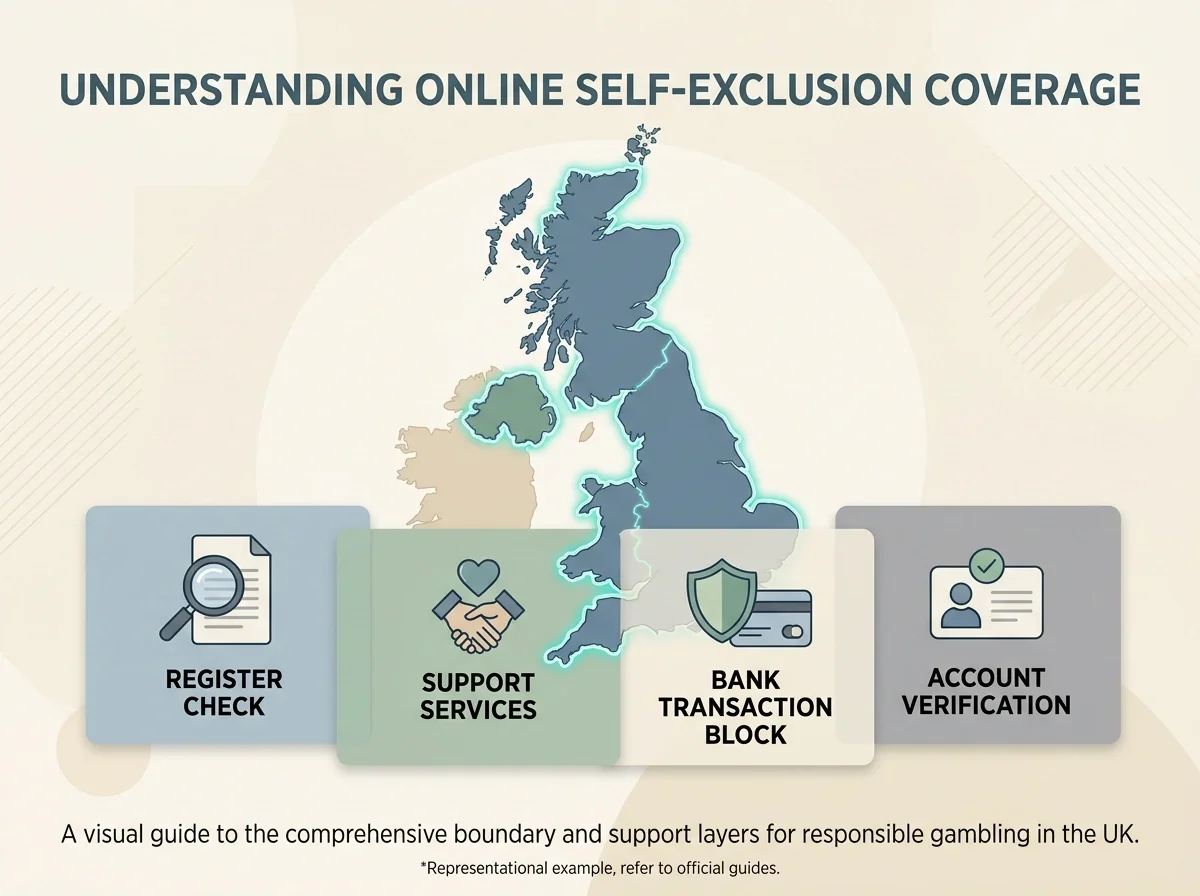
UK Casino Payment Limits: Bank Blocks and Spending Rules
 Available in GB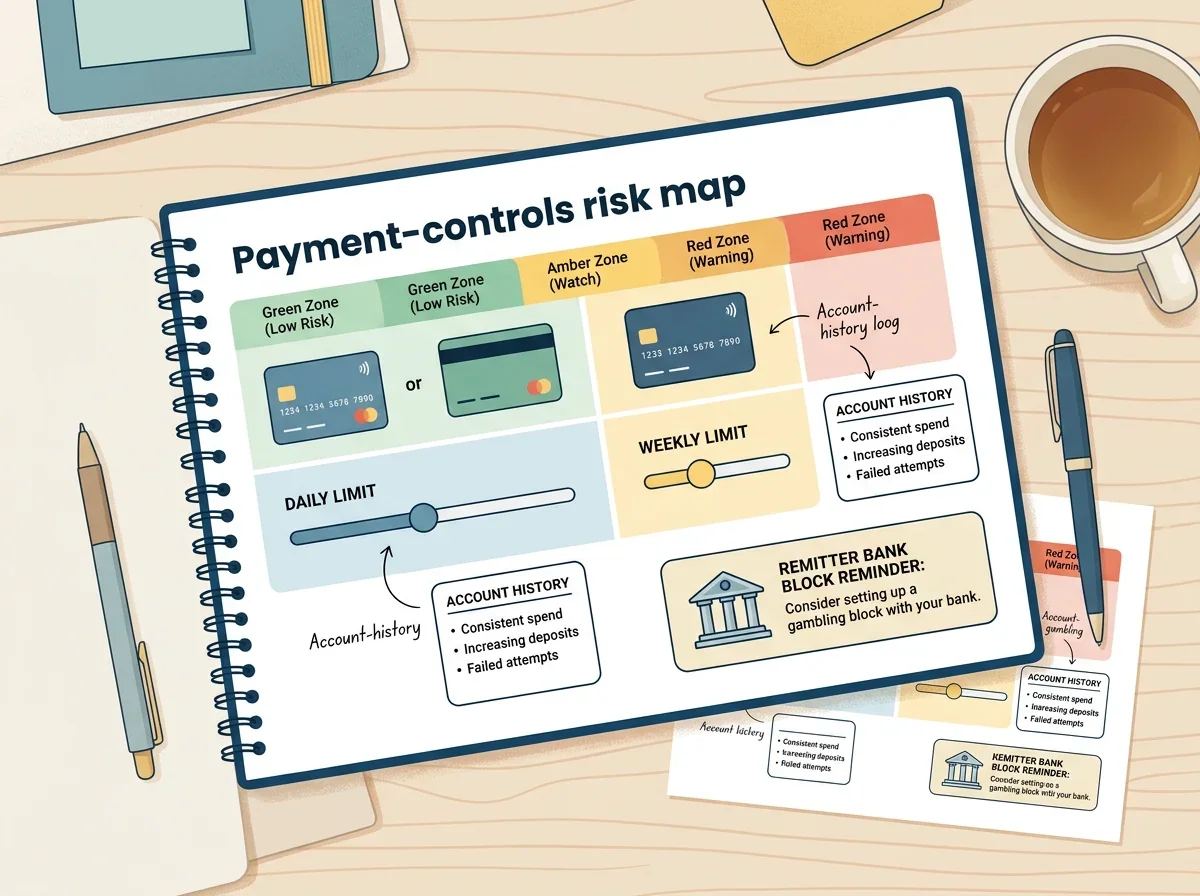
Payment Checks: Verifying UK Bank Gambling Blocks
Money movement is one of the clearest places where a gambling website shows its standards. Before you look at speed claims or promotional wording, ask whether the site makes the safe parts visible: how deposits work, whether credit-card use is excluded where the Great Britain restriction applies, how spending limits are set, whether account history can be reviewed, and where support is signposted. These are not minor admin details. They affect how quickly money leaves your account, how easily you can pause, and how much evidence you can keep if something later goes wrong.
In Great Britain, covered gambling operators must not accept credit-card payments for gambling. The Gambling Commission also says operators accepting e-wallets should ensure the e-wallet was not funded by a credit card. That does not mean every payment page is simple to judge at a glance, but it does mean a claim that presents credit-card gambling as normal or attractive should be treated as a serious caution signal. A website that sells credit access as convenience is moving in the opposite direction from the protection the rule is meant to create.
The check is wider than one card rule. Alternative payments, foreign-currency balances, crypto or virtual-asset wording, missing financial limits, weak account-history visibility and vague support routes can all make it harder to understand what is happening to your money. None of those signals proves a specific outcome on its own. Together, they tell you whether the site is making risk easier to see or easier to miss.
Best casino sites in the UK
- x3betBonus: Welcome Pack 100% Up to £1.000 + 200 Free Spins · Payout speed: 1-3 business days
- BeOnBetBonus: 100% up to €500 + 100 FS · Payout speed: 1-3 business days
- NightWinBonus: £900 + 400 free spins · Payout speed: 1-3 business days
- DieselwinBonus: Welcome Pack 250% up to £4000 + 200 FS · Payout speed: 1-3 business days
- SpinFormulaBonus: 550% Up To £15,000 + 550 FS · Payout speed: 1-3 business days
- AmunbetBonus: Join now and get 450% up to 2,700 GBP + 450 FS · Payout speed: 1-3 business days
A payment and control risk map
| Payment or control signal | Why it matters | Safer check or response |
|---|---|---|
| The site appears to accept credit cards for gambling by Great Britain customers. | Covered gambling operators in Great Britain must not accept credit-card payments for gambling. Presenting credit access as a benefit is a warning sign. | Do not treat the claim as convenience. Check the licence and pause before sending money or documents. |
| An e-wallet is accepted but the source of funds is unclear. | The credit-card restriction also matters where an e-wallet could be funded by a credit card. The payment route should not hide the underlying risk. | Read the payment terms carefully and avoid any route that seems designed to disguise credit-funded gambling. |
| The page promotes crypto, virtual assets, foreign currency or unusual payment rails as a main attraction. | Alternative or opaque payment routes can make account money, withdrawals, fees and disputes harder to understand. | Look for clear licence, identity, withdrawal, fee and customer-funds information before acting. |
| Financial limits are missing, hidden or hard to change. | Licensed remote standards include facilities for financial limits. A site that does not make limits visible gives you fewer practical controls. | Do not deposit until you can see how limits work. If you are already trying to limit spending, use support rather than another deposit route. |
| Account history is thin, hard to export or difficult to review. | Account information helps you see deposits, withdrawals and play history. Without it, it is harder to track spending and keep evidence. | Keep your own records, and use the withdrawal and ID checks guide if a dispute has already started. |
| Your bank offers a gambling-payment block, or you already have one active. | A bank block can add friction at the point money would leave your account. Trying to route around it can be a sign the protection is needed. | Check your bank’s current instructions directly. If the block is frustrating because you want to gamble, pause and use support. |
Low friction is not automatically a benefit
Many payment pages are written to make speed sound like the main test. Fast deposits, instant transfers and fewer checks can feel attractive when you are focused on an account opening or a possible withdrawal. In gambling, though, speed can work against you. A payment route that removes friction may also remove the moment when you could reconsider, set a limit, check the licence, or notice that you are trying to gamble while self-excluded.
That is why a safer payment reading begins with the controls. Can you set a deposit limit before money is spent? Can you see account history in a clear format? Are safer-gambling tools easy to find? Does the site explain support routes without hiding them behind promotional copy? Does the payment page make the cost, currency and withdrawal path understandable? These questions matter even if the site looks slick, because a polished payment screen can still leave you with weak protections.
If you are comparing sites because a limit, bank block or self-exclusion has stopped you elsewhere, treat the search itself as important information. The safer next step is not another payment method. It is to step back from the deposit decision and read the support options. A block or limit is meant to create a pause. Using that pause well is more protective than finding a route with less friction.
How spending limits and account history help
Financial limits are useful because they move the decision from a tense moment into a calmer one. A limit set before gambling begins can reduce the chance of chasing a loss, reacting to a bonus deadline or depositing because a withdrawal is delayed. The exact limit setting will vary by site and account, so the public text should not promise a specific procedure. The practical check is simpler: if you cannot find limits, cannot understand when they apply, or cannot see how account history is presented, you do not have enough information to judge the account safely.
Account history is just as important. It lets you compare what you think happened with what the account shows. It can help you spot repeated small deposits, fee deductions, currency issues or failed withdrawal attempts. It also gives you a record if you later need to complain about a licensed operator. A site that makes account history difficult to review is asking you to rely on memory at exactly the point where clear records matter.
These tools do not solve gambling harm on their own. A deposit limit can be changed, misunderstood or ignored. Account history can show the problem after the money has already gone. Treat them as baseline protections, not proof that gambling is safe for you. If you are using these tools because gambling feels hard to control, combine them with outside support rather than relying only on account settings.
Bank gambling-payment blocks
The Gambling Commission provides public guidance on gambling-payment blocks offered through banks. A bank block can be helpful because it sits outside the gambling account and can interrupt a deposit before it reaches a site. The exact steps, cooling-off periods and account coverage are bank-specific, so current instructions should be checked on your bank’s own pages rather than guessed from a general article.
A bank block is not a magic fix and should not be described that way. It may not cover every payment route or every financial product, and it does not address the pressure that can sit behind gambling. Its value is that it adds friction and gives you a practical layer of protection. If you are tempted to remove a block, use another bank, or move money through a different route to keep gambling, that is not just a payment question. It is a sign to use the support options page and speak to someone before making another money decision.
What to check before you deposit
- Confirm the website’s licence and domain before trusting any payment claim.
- Check whether credit-card gambling is being presented in a way that conflicts with the Great Britain restriction for covered gambling.
- Read how e-wallet funding is treated, especially where credit funding could be hidden from view.
- Look for financial limits before money is spent, not after a loss.
- Check whether account history is clear enough to review deposits, withdrawals and fees.
- Read the account-money terms if a bonus, fee, dormancy clause or customer-funds statement affects your balance.
- Use bank gambling-payment blocks as protection, not as an obstacle to route around.
If a payment page is attractive mainly because it seems to weaken checks, avoid limits, blur the currency or make money movement unusually easy, the safer response is to stop and verify. Convenience is not the same as trust.
Players looking for alternative platforms must clearly understand what GAMSTOP covers and excludes to make informed decisions about their gameplay.
Find reliable and secure gaming options by visiting our top-rated independent casino sites directory.
Created by the "Casino not on Gamstop" editorial team.